Now accepting new patients Crown Point & Chesterton, Indiana
Home / Procedures / aprevo Personalized Implants
Personalized Implant Technology First in the Central U.S. In the news: nation’s first two-level case

Carlsmed aprevo® Personalized Spine Implants

AI-designed, 3D-printed implants built from your own anatomy — engineered to precisely restore your spine's natural alignment. Dr. Hobbs was the first surgeon in the central United States to use aprevo.

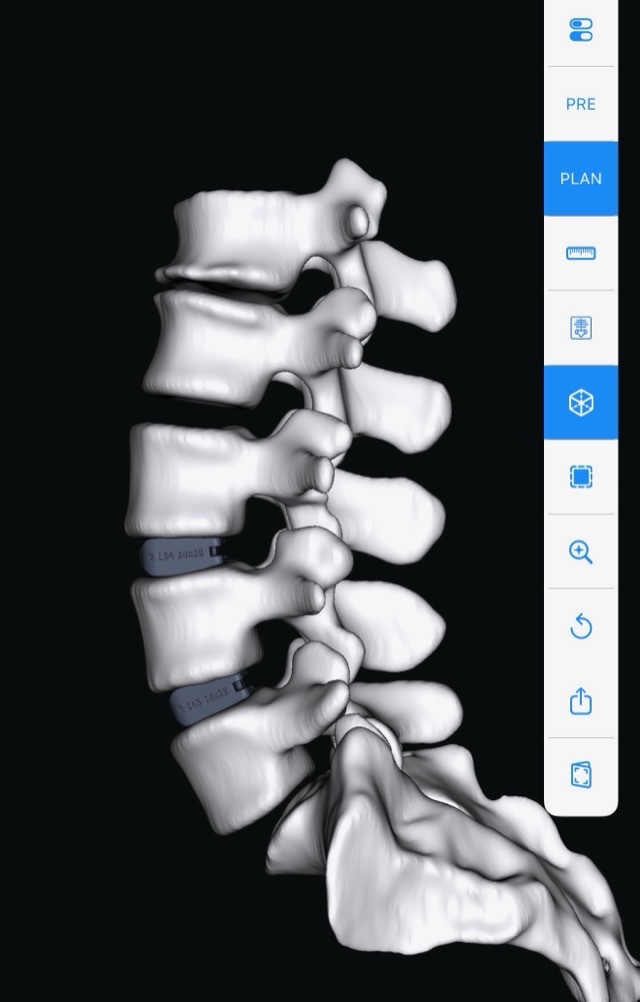
3D surgical plan of a lumbar spine with two personalized interbody devices positioned at the planned levels
Your plan, in 3DA patient-specific plan built from a CT scan — each interbody device is designed to that patient's anatomy before surgery begins
Built from your CT scan. Each interbody device is designed to your anatomy and your planned alignment, then 3D printed.
Alignment is the target. Restoring natural spinal alignment is closely linked to better outcomes and fewer revisions.
FDA 510(k) cleared. Cleared for lumbar interbody fusion, with FDA Breakthrough Device designation.
Medically reviewed by Jonathan G. Hobbs, M.D. · Updated June 2026

In the news · Becker’s Spine Review · September 28, 2026

The nation’s first two-level spinal fusion with patient-specific cages and rods

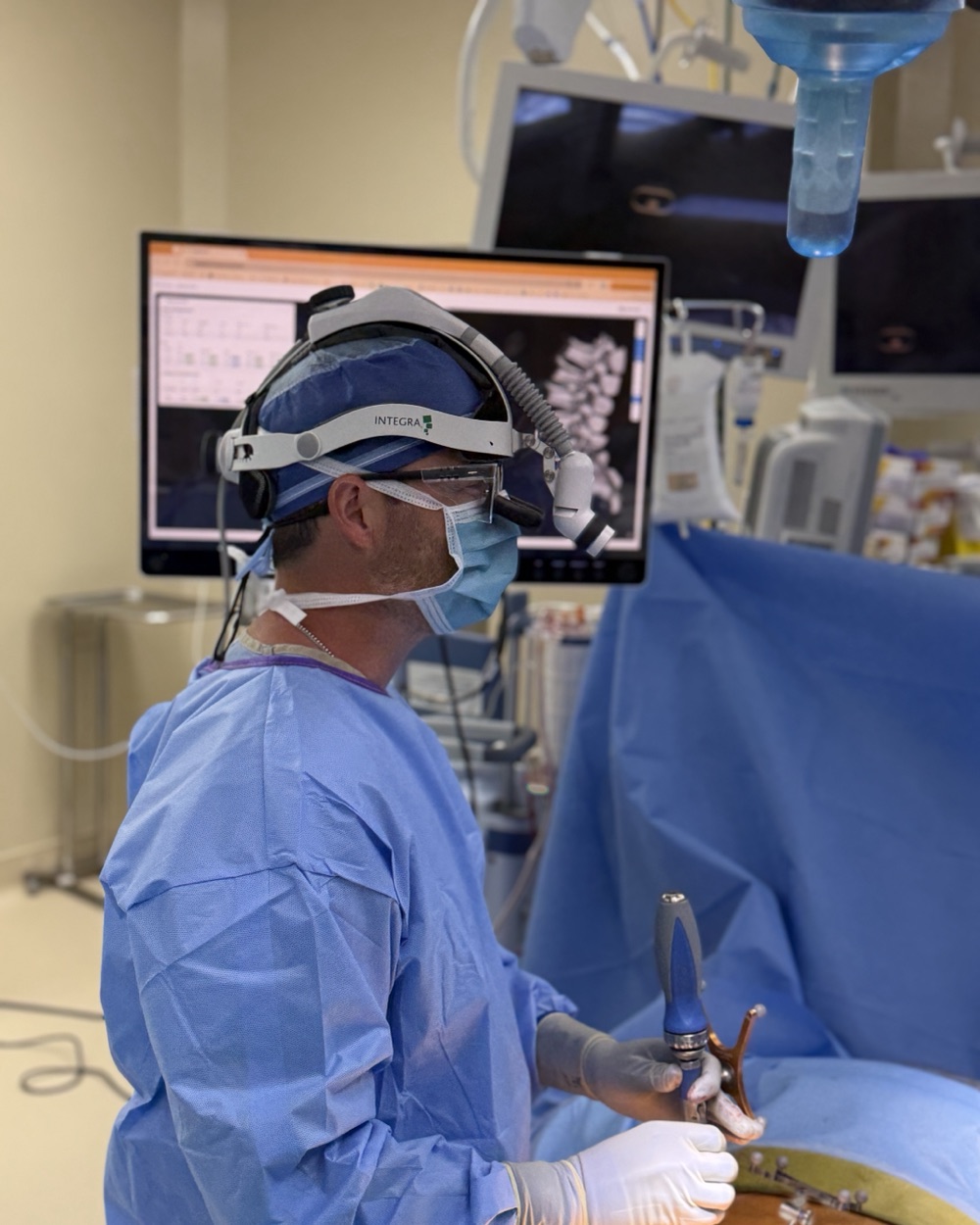
Jonathan G. Hobbs, M.D. performed the first two-level lumbar interbody fusion in the United States to combine Carlsmed’s patient-specific aprevo® TLIF interbody cages with Medtronic’s patient-specific UNiD™ rods. The transforaminal lumbar interbody fusion (TLIF) of the two lowest levels of the spine, L4–S1, was completed at Northwest Health – Porter in Valparaiso. Becker’s Spine Review covered the case on September 28, 2026.

Both the cages and the rods were designed from the patient’s own X-rays and CT scans and manufactured before surgery to a plan Dr. Hobbs reviewed and approved, then anchored with standard pedicle screws. Earlier cases that paired the two technologies used anterior or lateral approaches at a single level; this was the first two-level construct and the first performed through a posterior approach.

  • Northwest Health – Porter, Valparaiso, IN
  • TLIF, L4–S1 (two levels)
  • aprevo® TLIF cages + UNiD™ rods
  • Standard pedicle screws
“Instead of adapting the patient to standard implants during surgery, we can use their imaging to plan the correction in advance and create implants and rods for their specific anatomy. It is a planning tool, not a substitute for clinical judgment.”Jonathan G. Hobbs, M.D., in the practice announcement

Patient-specific technology does not mean surgery is the first or the right treatment for every patient. Dr. Hobbs begins with a complete evaluation and recommends nonsurgical care when appropriate. Call (219) 250-5010 to ask whether a personalized plan applies to your care.

As reported by Becker’s Spine Review

Indiana neurosurgeon performs nation’s 1st customized spinal fusion

Becker's Spine Review masthead above the article headline: Indiana neurosurgeon performs nation's 1st customized spinal fusion
Headline as published on beckersspine.com, September 28, 2026.

What Becker’s reported

  • Jonathan G. Hobbs, M.D., a neurosurgeon at Lakeshore Bone & Joint Institute, performed what the practice describes as the nation’s first fully customized posterior spinal fusion: a two-level lumbar interbody fusion combining patient-specific interbody cages and rods.
  • The procedure took place at Northwest Health – Porter in Valparaiso and fused the two lowest levels of the spine, L4–S1, according to the practice’s September 28 announcement.
  • The implants were Carlsmed’s patient-specific aprevo® TLIF interbody cages and Medtronic’s patient-specific UNiD™ rods, designed from the patient’s X-rays and CT scans and manufactured before surgery to a plan Dr. Hobbs reviewed and approved.
  • Traditional fusion uses standard-sized cages and rods that are bent during the operation; the patient-specific approach sets the alignment goal before surgery and builds the hardware to match that plan.

Summary in our own words. The full article is on beckersspine.com.

Interview in Becker’s Spine Review

Personalized implants could be a spine standard — access is a hurdle

Becker's Spine Review masthead above the article headline: Personalized implants could be a spine standard, access is a hurdle
Headline as published on beckersspine.com, October 9, 2026.

What Dr. Hobbs told Becker’s

  • Patient-specific implants have mostly been used in complex deformity surgery at academic centers. Appropriately selected patients with degenerative conditions deserve the same rigor in planning, and the barriers to wider use are cost, infrastructure, and access rather than the technology.
  • Conventional cages and manually contoured rods remain effective in experienced hands. Patient-specific technology is another way to turn a detailed preoperative plan into the final construct; the goal is precision and reproducibility, not customization for its own sake.
  • The evidence is early and largely industry-supported. Encouraging recovery in his own patients does not prove customization is the cause, and radiographic accuracy is not a substitute for a meaningful patient outcome.
  • Access should follow clinical need and the capacity to deliver care safely, not a ZIP code. Broader community access and regional specialization for the most complex cases are not competing goals.
  • The next frontier may be matching an implant’s structural characteristics, not only its shape, to the patient’s bone quality and mechanical demands, a direction for development rather than an established capability.

Summary in our own words; key quotes appear in the section above. The full interview is on beckersspine.com.

Interview · Becker’s Spine Review · October 9, 2026

Dr. Hobbs on where personalized implants go next

Eleven days after reporting the first case, Becker’s Spine Review asked Dr. Hobbs whether patient-specific implants could become a standard in spine surgery. His answer, in short: the technology belongs beyond academic deformity centers, for carefully selected patients with degenerative conditions, but access will be decided by cost, infrastructure, and reimbursement rather than by the engineering.

He was equally direct about the evidence. It is early and largely industry-supported; the encouraging recovery he has seen in his own patients, including pain, function, and postoperative opioid needs, does not prove that customization is the reason; and radiographic accuracy is not the same as a meaningful outcome. Conventional cages and manually contoured rods, he noted, remain effective in experienced hands.

  • Who should benefit
    “Patients with degenerative disease deserve the same rigor in planning that we bring to complex deformity surgery.”
  • What the technology is for
    “The objective is not customization for its own sake; it is greater precision and reproducibility.”
  • Access
    “Access should be determined by clinical need and the capacity to deliver care safely — not by a ZIP code.”
  • What comes next
    “The next frontier may be personalization not only of an implant’s shape, but also of its structural characteristics.”

Quotations as published by Becker’s Spine Review (“Personalized implants could be a spine standard — access is a hurdle,” by Hailey Bosek). Read the full interview · All coverage and what it means for patients

The technology

What Are aprevo Personalized Implants?

Most spinal fusion surgery uses off-the-shelf implants — interbody spacers that come in a limited range of stock sizes and shapes. The surgeon picks the closest fit and adapts the operation around it. The Carlsmed aprevo® platform flips that approach: it builds the implant around you.

aprevo combines AI-enabled surgical planning with 3D-printed, patient-specific implants. Starting from your own CT scan, Dr. Hobbs and the aprevo software design a surgical plan to your target alignment, and a personalized titanium device is 3D printed to match your unique anatomy. The goal is to more precisely restore your spine's natural alignment — which is closely linked to better outcomes and a lower chance of needing revision surgery.

aprevo personalized interbody devices are FDA 510(k) cleared for lumbar interbody fusion, and the technology has earned FDA Breakthrough Device designation. Dr. Hobbs was the first surgeon in the central United States to use them.
Explore the implant

A Closer Look at Your Personalized Implant

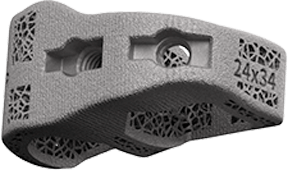
Explore Carlsmed’s aprevo implant imagery, from the titanium device itself to its fit between the vertebrae.

Carlsmedaprevo® personalized implants
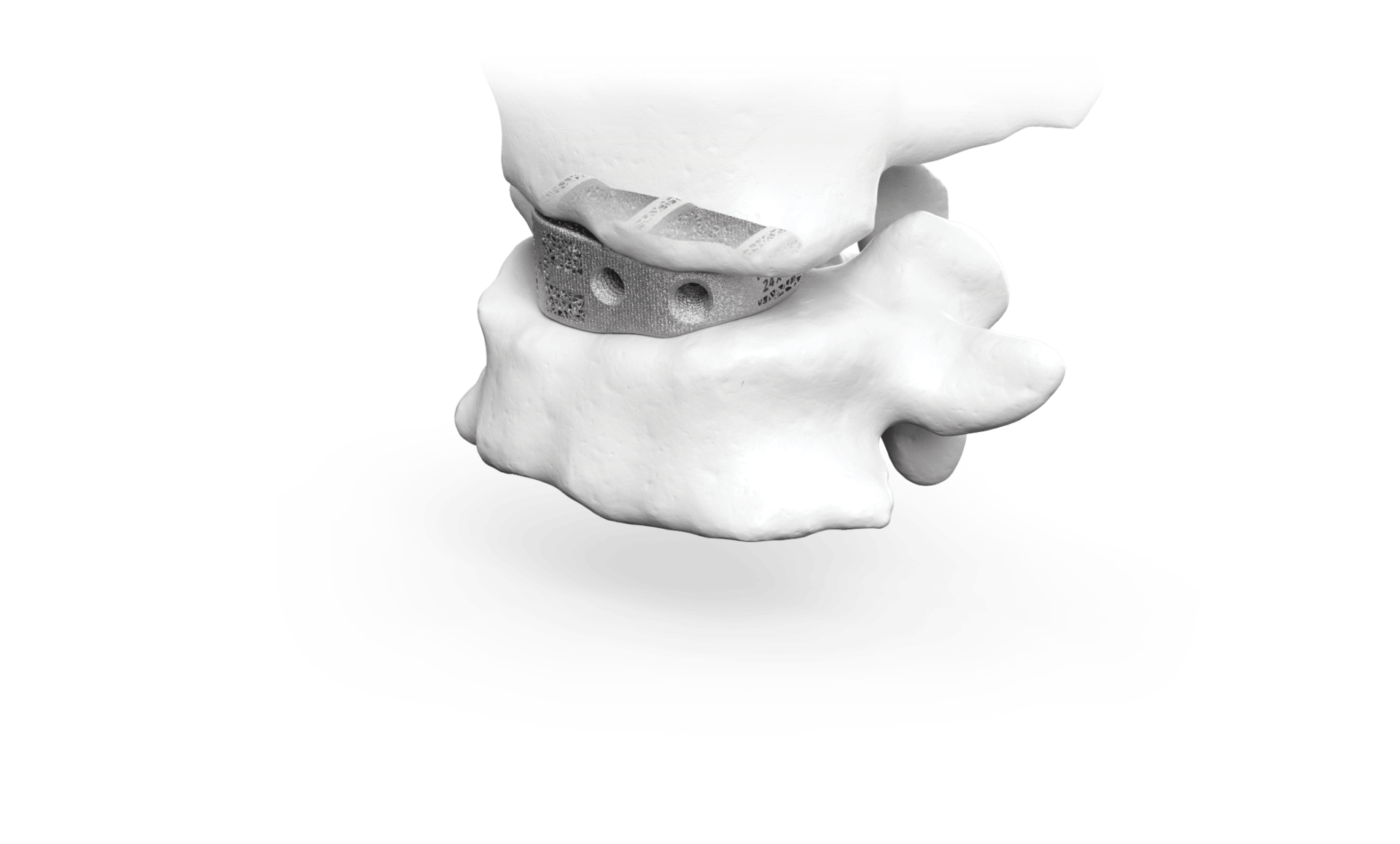
Carlsmed product rendering of an aprevo implant positioned between two lumbar vertebrae
Designed around your anatomyCarlsmed rendering of an aprevo implant between vertebrae.

Product imagery © Carlsmed. Renderings illustrate device design and anatomy; they do not depict a specific patient or clinical outcome. View manufacturer source.

Five steps

The aprevo Process, Step by Step

From CT scan to confirmed result, every personalized device follows the same five-step pathway.

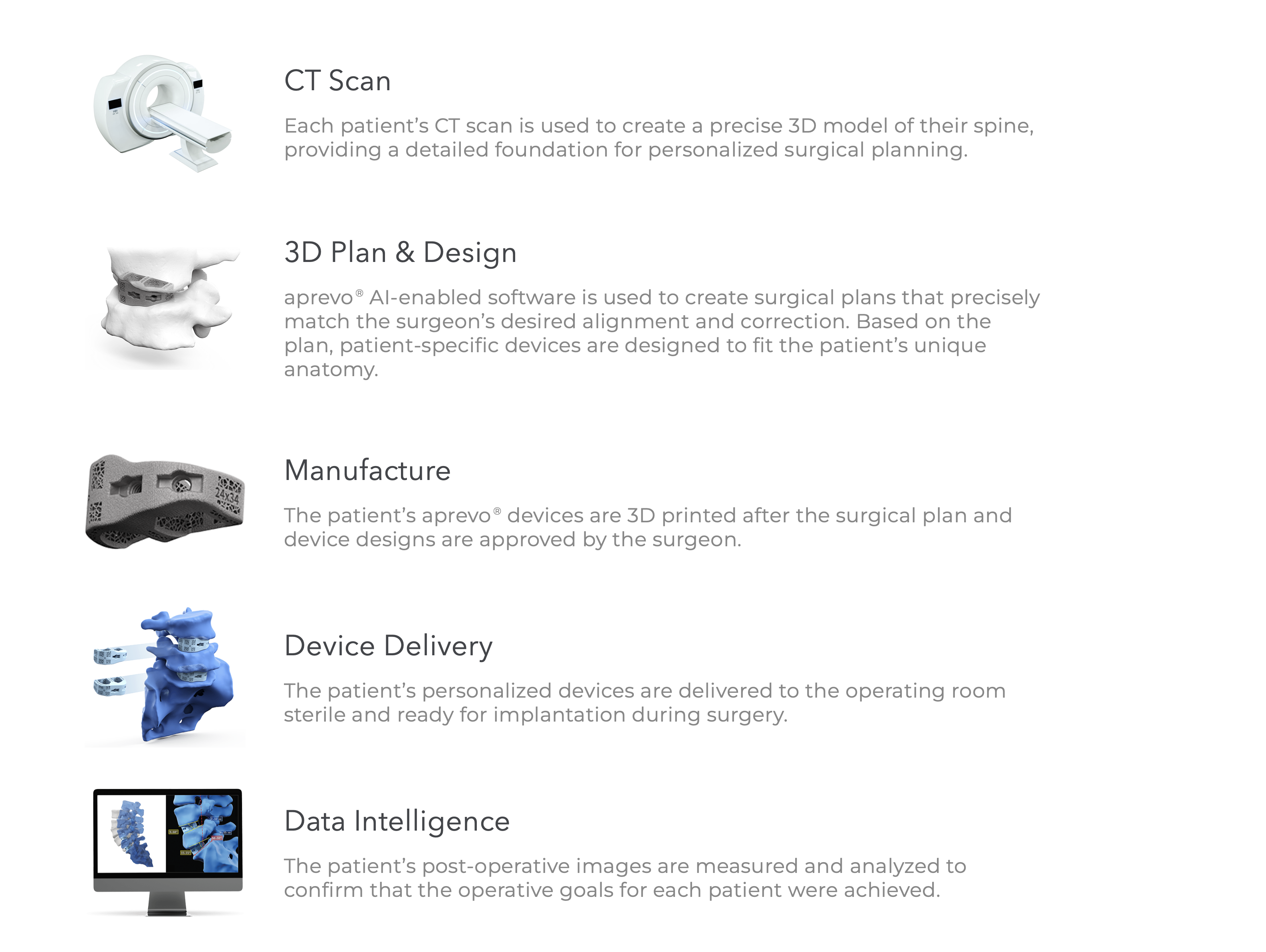
The aprevo process: CT Scan creates a precise 3D model of the spine; 3D Plan and Design uses AI-enabled software to match the surgeon's desired alignment and design patient-specific devices; Manufacture 3D-prints the approved devices; Device Delivery brings the sterile personalized implants to the operating room; Data Intelligence measures post-operative images to confirm the surgical goals were achieved.
Source: Carlsmed, maker of the aprevo® personalized spine implant platform.
1
CT Scan

Your CT scan is used to create a precise 3D model of your spine — the foundation for personalized planning.

Before surgery
2
3D Plan & Design

aprevo AI-enabled software builds a surgical plan to the target alignment, and patient-specific devices are designed to your anatomy.

Before surgery
3
Manufacture

Once Dr. Hobbs approves the plan and device design, your personalized implants are 3D printed.

Before surgery
4
Device Delivery

Your devices arrive in the operating room sterile and ready for implantation during surgery.

Day of surgery
5
Data Intelligence

Your post-operative images are measured and analyzed to confirm the operative goals were achieved.

After surgery
Pre-op

AI-Enabled 3D Surgical Planning

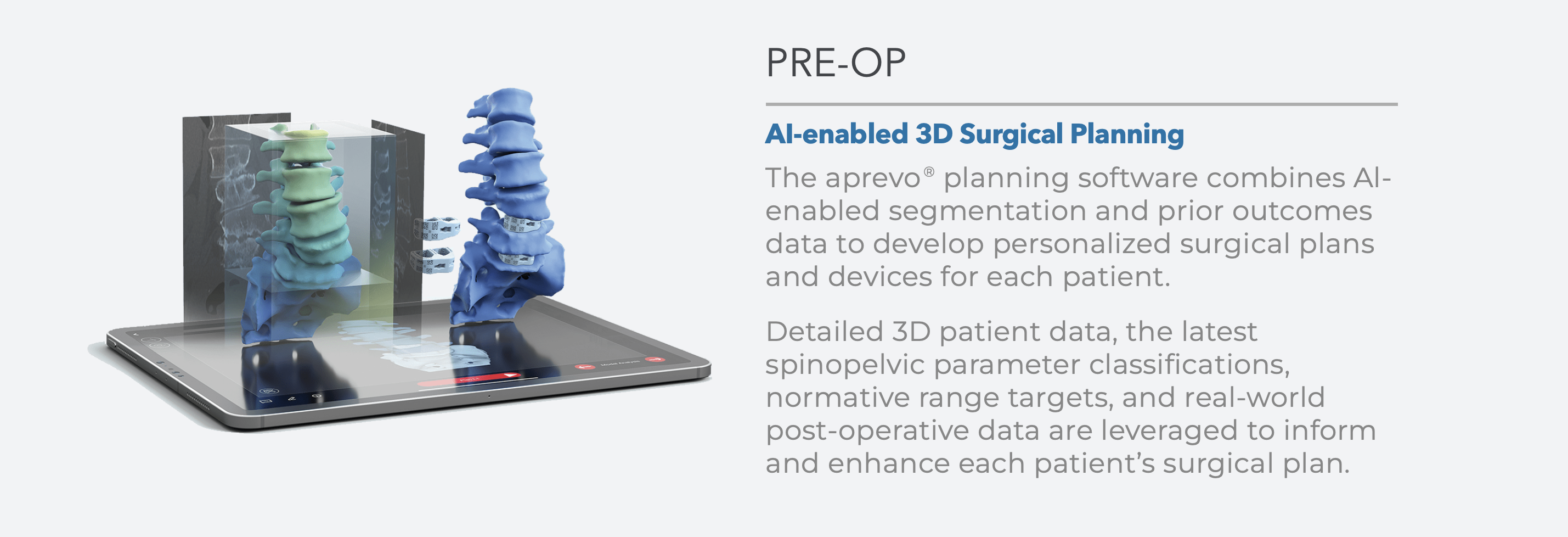
The aprevo planning software combines AI-enabled segmentation with prior outcomes data to develop a personalized surgical plan and devices for each patient.

Detailed 3D patient data, the latest spinopelvic parameter classifications, normative alignment targets, and real-world post-operative data are all used to inform and enhance your surgical plan before the procedure begins.

Pre-op aprevo AI-enabled 3D surgical planning shown on a tablet, with a 3D spine model and personalized interbody devices.
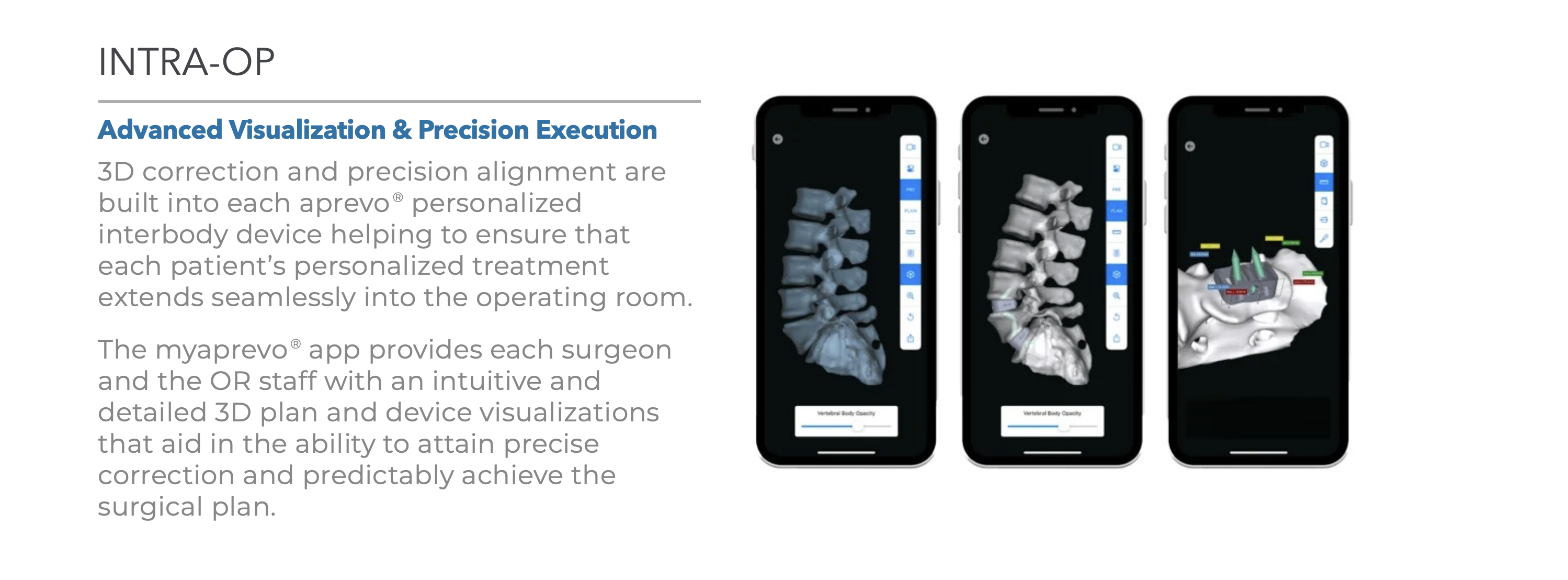
Intra-op myaprevo app shown on three phones, displaying interactive 3D plan and device visualizations of the spine for precise surgical execution.
Intra-op

Advanced Visualization & Precision Execution

3D correction and precision alignment are built into each aprevo personalized interbody device, helping ensure that each patient's personalized treatment plan extends seamlessly into the operating room.

The myaprevo® app gives Dr. Hobbs and the OR team intuitive, detailed 3D plan and device visualizations that aid in attaining precise correction and predictably achieving the surgical plan.

Post-op

Enhanced Reproducibility & Integrated Intelligence

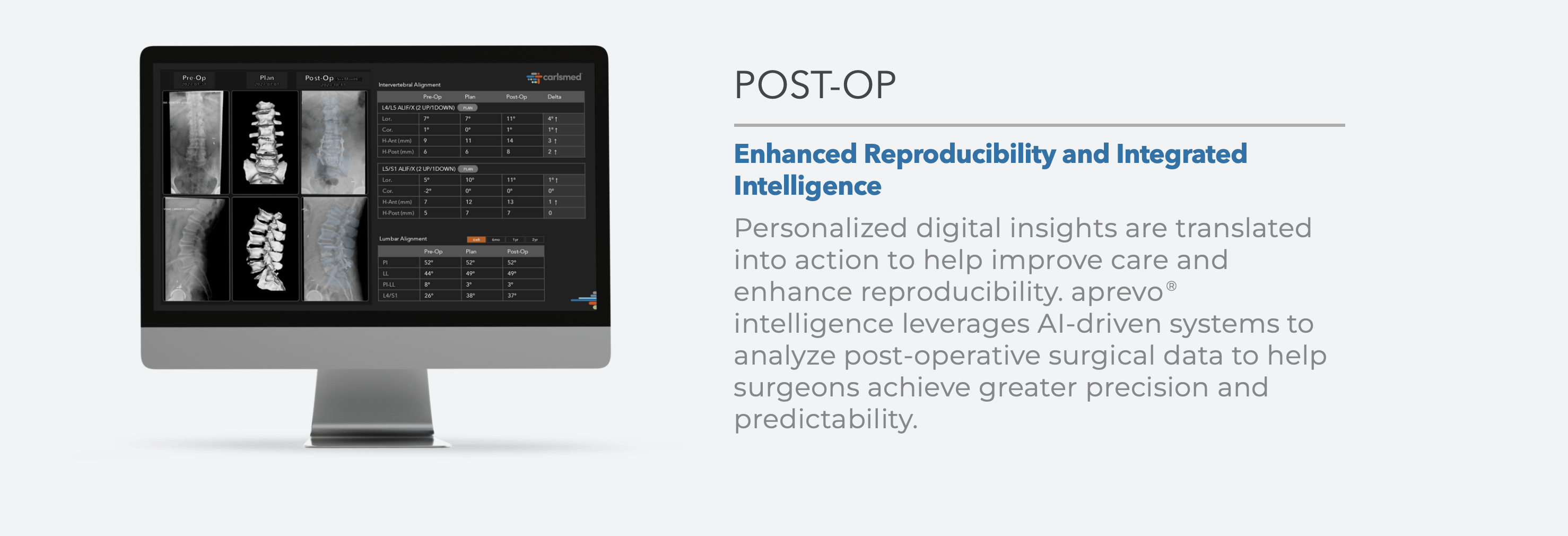
Personalized digital insights are translated into action to help improve care and enhance reproducibility from one patient to the next.

aprevo intelligence leverages AI-driven systems to analyze post-operative surgical data — comparing the plan to the achieved result — helping surgeons achieve greater precision and predictability over time.

Post-op aprevo analysis on a monitor comparing pre-op, plan, and post-op X-rays with intervertebral and lumbar alignment measurements.
Four advantages

Why Personalized Implants Matter

In spine surgery, restoring proper alignment is one of the strongest predictors of a lasting result. Personalized implants are designed to hit that target more reliably than stock hardware.

01

Built to Your Anatomy

Designed from your own CT scan rather than chosen from stock sizes.

02

Precise Alignment

Engineered to restore your natural spinal alignment and balance.

03

Aim to Reduce Revisions

Better alignment is associated with a lower likelihood of revision surgery.

04

AI-Guided Planning

Plans informed by AI segmentation and real-world outcomes data.

Compare

Personalized vs. Off-the-Shelf Interbody Implants

An interbody implant fills the space where a worn disc used to be and sets the angle between two vertebrae. That angle — multiplied across the levels being fused — is what determines whether the spine ends up balanced over the pelvis. This is exactly where the shape of the implant matters most.

aprevo® Personalized

  • Shape designed from your CT scan and planned correction
  • Surfaces matched to your endplates for a snug, stable fit
  • Built-in angle targets the planned alignment
  • Post-op images measured against the plan to confirm the result

Standard Off-the-Shelf

  • Limited stock sizes and angles — the surgeon picks the closest fit
  • Flat or generic surfaces can leave gaps at curved endplates
  • Proven, well-established option for many single-level fusions
  • Available immediately with no design lead time

The best implant depends on your anatomy, your alignment, and your surgical goals. Dr. Hobbs selects the device that gives you the most reliable path to a balanced, lasting fusion.

Candidacy

Who Benefits from a Personalized Implant?

Personalized aprevo implants are used in lumbar fusion procedures where restoring proper alignment is central to a good result.

Technology

Implant Technology, Chosen for You

aprevo is one of several advanced tools Dr. Hobbs draws on. Each is matched to the patient, the diagnosis, and the alignment goals of the operation.

Does every fusion need a personalized implant?

No. For many straightforward single-level fusions, a well-chosen standard implant works very well. aprevo earns its place when restoring alignment is central to the goal of surgery — deformity, multi-level cases, and revisions.

How fusion works
Jonathan G. Hobbs, M.D.
Board-Certified Neurosurgeon · Spine Surgery
American Board of Neurological SurgeryABNS
Certified
The University of ChicagoResidency
Chicago
University of KentuckyM.D.
Kentucky
Why Dr. Hobbs

Why Choose Dr. Hobbs for Personalized Spine Surgery

  • A National First

    Performed the first two-level fusion in the U.S. combining aprevo TLIF cages with patient-specific UNiD rods, reported by Becker’s Spine Review; also the first surgeon in the central United States to use aprevo.

  • Deformity & Alignment Expertise

    Specialty-trained in correcting complex spinal deformities and restoring alignment.

  • Board-Certified Neurosurgeon

    Certified by the American Board of Neurological Surgery.

  • Elite Training

    University of Kentucky medical degree; neurosurgery residency at the University of Chicago, serving as chief resident; clinical associate in the University of Chicago Department of Neurosurgery.

  • Technology-Forward Care

    Pairs aprevo with image-guided navigation and AI-assisted planning for precise, individualized surgery.

  • Lakeshore Bone & Joint Institute

    Practicing at Northwest Indiana's most preferred orthopedic and spine practice, with offices in Crown Point & Chesterton.

Frequently Asked Questions About aprevo Personalized Implants

aprevo is a personalized spine implant system that combines AI-enabled surgical planning with 3D-printed, patient-specific interbody devices. Instead of using a standard, off-the-shelf implant, Dr. Hobbs uses a device custom-designed from each patient's own CT scan and surgical plan to precisely match their unique anatomy and target spinal alignment.
The process has five steps. First, the patient's CT scan is used to create a precise 3D model of the spine. Second, aprevo AI-enabled software designs a surgical plan and patient-specific devices to match the surgeon's desired alignment. Third, the devices are 3D printed once the surgeon approves the plan. Fourth, the sterile, personalized devices are delivered to the operating room. Fifth, post-operative images are measured to confirm the surgical goals were achieved.
Standard interbody implants come in a limited range of stock sizes and shapes, so the surgeon must fit the patient to the device. A personalized aprevo implant is built to the individual's anatomy and planned correction, which is designed to more precisely restore natural spinal alignment. Achieving proper alignment is associated with better outcomes and a lower likelihood of revision surgery, which is needed in a meaningful share of traditional fusions.
Yes. Carlsmed's aprevo personalized interbody devices are FDA 510(k) cleared for lumbar interbody fusion, and the technology has received FDA Breakthrough Device designation. Dr. Hobbs uses aprevo for appropriate patients as part of a personalized surgical plan.
Personalized aprevo implants are used in spinal fusion procedures where restoring proper alignment is important — including degenerative conditions and adult spinal deformity. Dr. Hobbs determines whether a personalized device is right for you based on your anatomy, alignment, and surgical goals.
Yes. Jonathan G. Hobbs, M.D. was the first surgeon in the central United States to use the Carlsmed aprevo personalized interbody implant. He offers it to appropriate patients at Lakeshore Bone & Joint Institute, with offices in Crown Point & Chesterton, Indiana.
Jonathan G. Hobbs, M.D. performed the first two-level lumbar interbody fusion in the United States to combine Carlsmed's patient-specific aprevo TLIF interbody cages with Medtronic's patient-specific UNiD rods. The L4–S1 TLIF was completed at Northwest Health – Porter in Valparaiso, Indiana. Both the cages and the rods were designed from the patient's own X-rays and CT scans and manufactured before surgery to a plan Dr. Hobbs approved, then anchored with standard pedicle screws. Becker's Spine Review reported the case on September 28, 2026.
In an October 9, 2026 interview with Becker's Spine Review, Dr. Hobbs said patient-specific implants have mostly been used for complex deformity surgery at academic centers, and that appropriately selected patients with degenerative conditions deserve the same rigor in planning. He also said experienced surgeons achieve excellent results with conventional cages and manually contoured rods, and that the goal of customization is precision and reproducibility, not customization for its own sake. Patient selection comes first; an evaluation decides whether surgery is needed at all. Read the interview highlights.
Not yet, in Dr. Hobbs's own assessment. He told Becker's Spine Review that the early evidence is encouraging but evolving and largely industry-supported, that recovery trends in his own patients do not prove customization is the cause, and that radiographic accuracy is not a substitute for a meaningful patient outcome. He favors measured adoption: thoughtful patient selection, rigorous follow-up, and transparent conversations about clinical value and cost.

Ask About a Personalized Approach

If you're facing spinal fusion, ask Dr. Hobbs whether a personalized aprevo implant is right for your anatomy and alignment goals. Call today to schedule a consultation.

(219) 250-5010

Monday – Friday · 8:00 AM – 4:30 PM

Crown Point Office

500 E. 109th Avenue
Crown Point, IN 46307

Chesterton Office

601 Gateway Boulevard
Chesterton, IN 46304

Your next step

Discuss your spine care with Dr. Hobbs

Jonathan G. Hobbs, M.D. is a board-certified neurosurgeon at Lakeshore Bone & Joint Institute. For questions about carlsmed aprevo® personalized spine implants, call the office to arrange an individual evaluation and discuss which options may be appropriate.

Consultation offices: Crown Point, Chesterton. Your symptoms, examination, imaging, and prior treatment help guide the discussion.

Request a free second-opinion review

Page updated . About content and medical review dates.