Home / Procedures / Revision & Failed Fusion Surgery
Second Opinions & Revision Surgery

Still in Pain After Spine Surgery?

When a previous operation does not end the pain, it usually means one specific, correctable problem was missed or has developed since. Dr. Hobbs specializes in finding the real cause — and fixing it. Use the interactive guide below to explore what may be going on.

Call (219) 250-5010
Medically reviewed by Jonathan G. Hobbs, M.D. · Updated June 2026

A Failed Fusion Is Not the End of the Road

“Failed back surgery syndrome” sounds final, but it simply means the pain did not resolve — and that there is a reason worth finding. The most important step in revision surgery is not the operation itself; it is correctly identifying why the first surgery did not work. Get that right, and the fix becomes clear.

Interactive — find the likely cause

Why Might a Fusion Fail?

Start with what you are feeling, or tap any cause to learn more.

Which sounds most like you?

Interactive — click each step

The Revision Journey

Finding the Real Cause

Revision surgery only works when it targets the true pain generator. Dr. Hobbs uses the right test for each question — not just a repeat MRI.

Fine-cut CT
Shows whether the bone actually fused — far better than MRI for assessing a non-union
Flexion-Extension X-rays
Reveal hidden motion or instability at the operated or adjacent level
Contrast MRI
Tells scar tissue apart from a recurrent disc herniation — they are treated very differently
Standing Alignment Films
Measure spinopelvic balance to detect flatback or lost curve

Why Choose Dr. Hobbs for Revision Surgery

Revision Focus
Specializes in correcting failed, painful, or incomplete prior fusions
Image-Guided Precision
StealthStation navigation and Mazor robotics for safe, accurate work through scar tissue
AI-Driven Planning
Plans alignment and construct design in advance, with patient-specific implants when needed
Minimally Invasive When Possible
Tissue-sparing approaches to reduce new scarring and speed recovery
Elite Training
University of Kentucky medical degree; neurosurgery residency at the University of Chicago, serving as chief resident
Honest Second Opinions
If surgery is not the answer, he will tell you — and help you find the care that is

Frequently Asked Questions

Failed back surgery syndrome is a general term for pain that persists or returns after spine surgery. It is not a single problem but a group of possible causes — such as a fusion that did not heal, a nerve that is still or again compressed, hardware that has loosened, wear of an adjacent level, scar tissue, or loss of spinal alignment. The key to treating it is identifying which of these is actually causing the pain.
A fusion can fail for several reasons: the bones may not fully knit together (pseudarthrosis or non-union); the hardware may loosen, shift, or break; a nerve may remain or become compressed again; the level next to the fusion may wear out (adjacent segment disease); the spine may lose its natural alignment; or scar tissue may irritate a nerve. Dr. Hobbs uses targeted imaging to determine the specific cause in each patient.
Dr. Hobbs starts by finding the true source of the pain. That means reviewing your prior surgery, examining you, and using the right imaging — a fine-cut CT to check whether the fusion healed, flexion-extension X-rays to look for instability, an MRI (sometimes with contrast) to tell scar tissue from a recurrent disc, and standing X-rays to measure alignment. Surgery is recommended only when there is a clear, correctable problem and nonsurgical care has not provided relief.
Revision surgery is generally more complex than a first operation because of scar tissue and altered anatomy, which is why experience and precision matter. Dr. Hobbs uses image-guided StealthStation navigation, AI-driven planning, and minimally invasive techniques to work safely and accurately. He discusses the specific risks and benefits with each patient before recommending surgery.
In many cases, yes. Depending on the cause, Dr. Hobbs can often address a failed fusion with minimally invasive, tissue-sparing techniques and image-guided navigation, which can mean less pain and a faster recovery than traditional open revision. Some complex revisions require a larger approach; the plan is tailored to your specific problem.
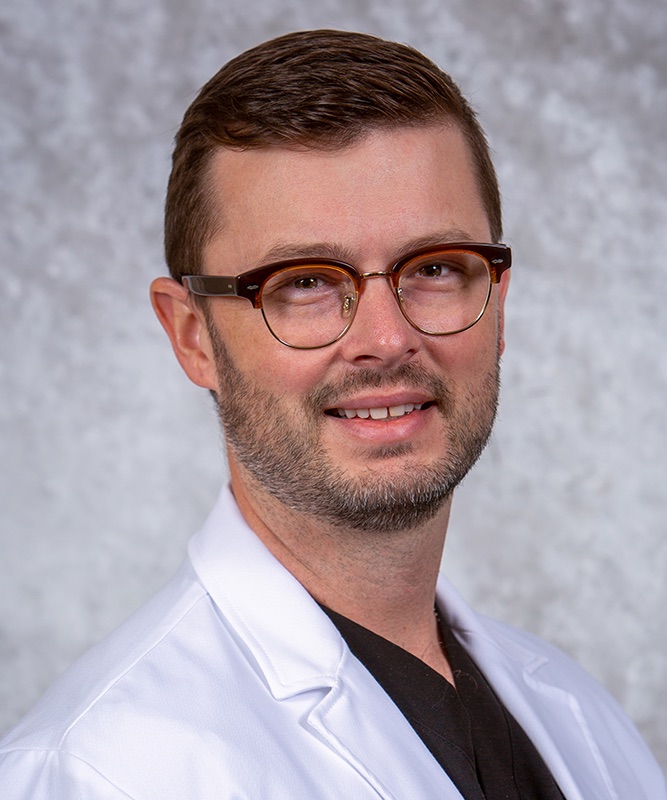
Yes. Jonathan G. Hobbs, M.D. is a board-certified neurosurgeon who specializes in revision surgery for patients with continued or returning pain after a prior spine operation. He practices at Lakeshore Bone & Joint Institute, with offices in Crown Point, Chesterton, and Portage, Indiana.

Get a Fresh Look at Your Spine

If you are still in pain after spine surgery, a second opinion can find what was missed. Bring your prior records and imaging — Dr. Hobbs will help you understand what is going on and whether revision can help. Call today.

(219) 250-5010

Monday – Friday · 8:00 AM – 5:00 PM

Crown Point Office

500 E. 109th Avenue
Crown Point, IN 46307

Chesterton Office

601 Gateway Boulevard
Chesterton, IN 46304