Now accepting new patients Crown Point & Chesterton, Indiana
Home / Surgical Process
Before · During · Beyond Surgery

Your Surgery, Planned to the Detail

Dr. Hobbs combines AI-driven surgical planning, image-guided navigation, patient-specific implants, and real-time validation into one connected process — so your operation is mapped out precisely before it begins, executed accurately in the OR, and confirmed and reviewed afterward.

Regions of the spine An anatomical illustration of the spine in side view, with the cervical neck, thoracic mid-back, and lumbar low-back regions labeled. Cervical Neck Thoracic Mid-back Lumbar Low back

Every region is planned before surgery day
Medically reviewed by Jonathan G. Hobbs, M.D. · Updated June 2026

A Connected, Four-Step Process

Rather than relying on guesswork in the operating room, Dr. Hobbs plans each case in advance and uses advanced technology to carry that plan out precisely. The result is a personalized approach designed for accuracy, smaller incisions, and more predictable results.

Step 1 · Before Surgery

Plan

Every surgery begins with a thoughtful, detailed plan. Using AI-driven planning software, Dr. Hobbs and a dedicated clinical engineering team build a complete, patient-specific surgical plan — before a single incision is made.

AI-Driven Alignment Plan

A 2D alignment plan and 3D screw-trajectory plan are built from your own imaging, mapping out target alignment, implant placement, and any needed corrections.

Predictive Modeling

Predictive models anticipate how the rest of your spine will compensate after surgery, helping Dr. Hobbs choose the strategy most likely to give you a lasting result.

Patient-Specific Implants

From the approved plan, custom implants — including Carlsmed aprevo interbodies and Medtronic UNiD rods — are designed and 3D printed to match your unique anatomy.

Step 2 · During Surgery

Execute

In the operating room, the pre-operative plan is brought to life. Dr. Hobbs reviews the plan within the surgical software and uses image-guided navigation to place every screw and implant exactly as planned.

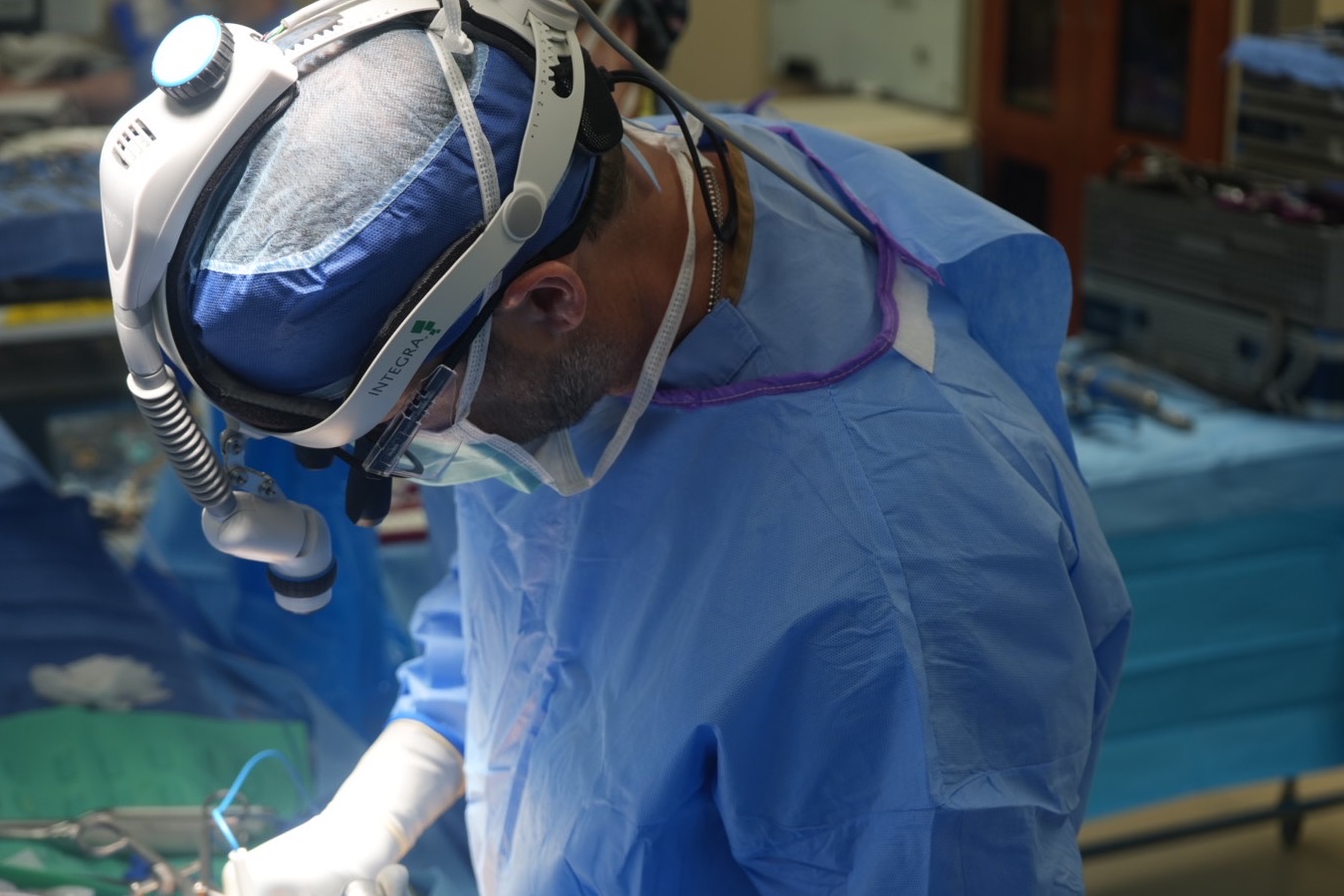
Dr. Hobbs in the operating room wearing a surgical headlight, focused on the surgical field
Dr. Hobbs in the operating room. Each step of the plan is checked against live navigation before an implant is placed.

Image-Guided Navigation

Medtronic StealthStation navigation acts like a GPS for the spine — giving real-time, 3D guidance so instruments and implants are placed with exceptional accuracy through small, tissue-sparing approaches.

Now in use

Robotic Guidance

The Medtronic Stealth AXiS™ robotic arm holds each planned trajectory steady while Dr. Hobbs places the implant. He performed the first robotic spine surgery in Northwest Indiana with this system at Northwest Health Porter in September 2026. Read about the first case.

Personalized Rod Template

The custom UNiD rod serves as a physical template in the OR, helping achieve the exact alignment that was planned for you.

Step 3 · During Surgery

Reconcile

Before finishing, Dr. Hobbs confirms in real time that the surgical goals have actually been achieved — not just assumed — so the result matches the plan.

LiveAlign Real-Time Tracking

A first-of-its-kind capability that shows vertebral motion as it happens, giving real-time visual confirmation that your alignment targets have been met — without additional radiation.

O-arm Imaging Verification

Intra-operative O-arm imaging provides a final check of alignment and confirms implants are placed accurately before surgery is complete.

Step 4 · Beyond Surgery

Analyze

The process doesn't end in the OR. Your post-operative imaging is measured and compared against the original plan, and outcomes are tracked over time — informing your follow-up care and continuously refining Dr. Hobbs's technique.

Post-Operative Analytics

Radiographic alignment data is reviewed to confirm the operative goals were achieved and to guide your recovery.

Longitudinal Outcome Tracking

Outcomes are followed over months and compared across cases, supporting continuous improvement and more predictable results for future patients.

Who This Approach Helps

This personalized, technology-guided process is especially valuable for complex and degenerative spine conditions — and for patients seeking the most precise, individualized care available.

Adult Spinal Deformity
Degenerative Spine (incl. MIS)
Revision of Failed Fusions
Cervical Spine

Experience Personalized Spine Care

Find out whether this personalized, technology-guided approach is right for your spine condition. Call today to schedule a consultation with Dr. Hobbs.

(219) 250-5010

Monday – Friday · 8:00 AM – 4:30 PM

Crown Point Office

500 E. 109th Avenue
Crown Point, IN 46307

Chesterton Office

601 Gateway Boulevard
Chesterton, IN 46304

Your next step

Discuss your spine care with Dr. Hobbs

Jonathan G. Hobbs, M.D. is a board-certified neurosurgeon at Lakeshore Bone & Joint Institute. For questions about your surgery, planned to the detail, call the office to arrange an individual evaluation and discuss which options may be appropriate.

Consultation offices: Crown Point, Chesterton. Your symptoms, examination, imaging, and prior treatment help guide the discussion.

Request a free second-opinion review

Page updated . About content and medical review dates.

