Home / Procedures / Spinal Fusion & Stabilization
Stabilization Surgery

Spinal Fusion & Stabilization

When a segment of the spine is unstable or its motion is the source of pain, joining it into one solid, stable unit can bring lasting relief. See exactly how a fusion works below — then learn how Dr. Hobbs does it with minimally invasive, image-guided precision.

Call (219) 250-5010
Medically reviewed by Jonathan G. Hobbs, M.D. · Updated June 2026

What Is Spinal Fusion?

Spinal fusion permanently joins two or more vertebrae so they heal into a single, solid bone. By removing the painful, unstable motion at that segment — the way a cast lets a broken bone knit together — fusion can relieve pain and restore stability. It is used for conditions such as spondylolisthesis, instability, deformity, fractures, and severe disc degeneration.

Interactive — build it step by step

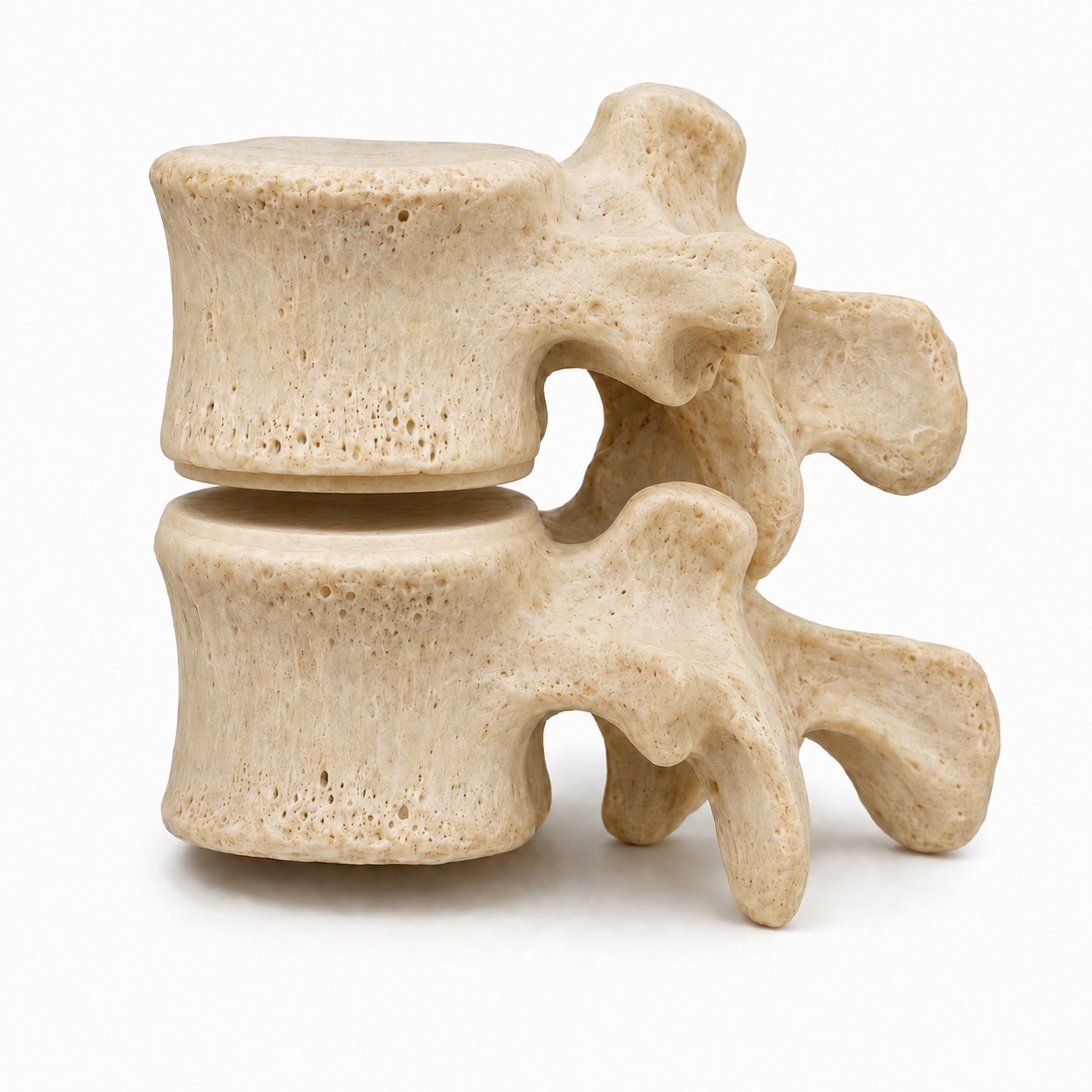
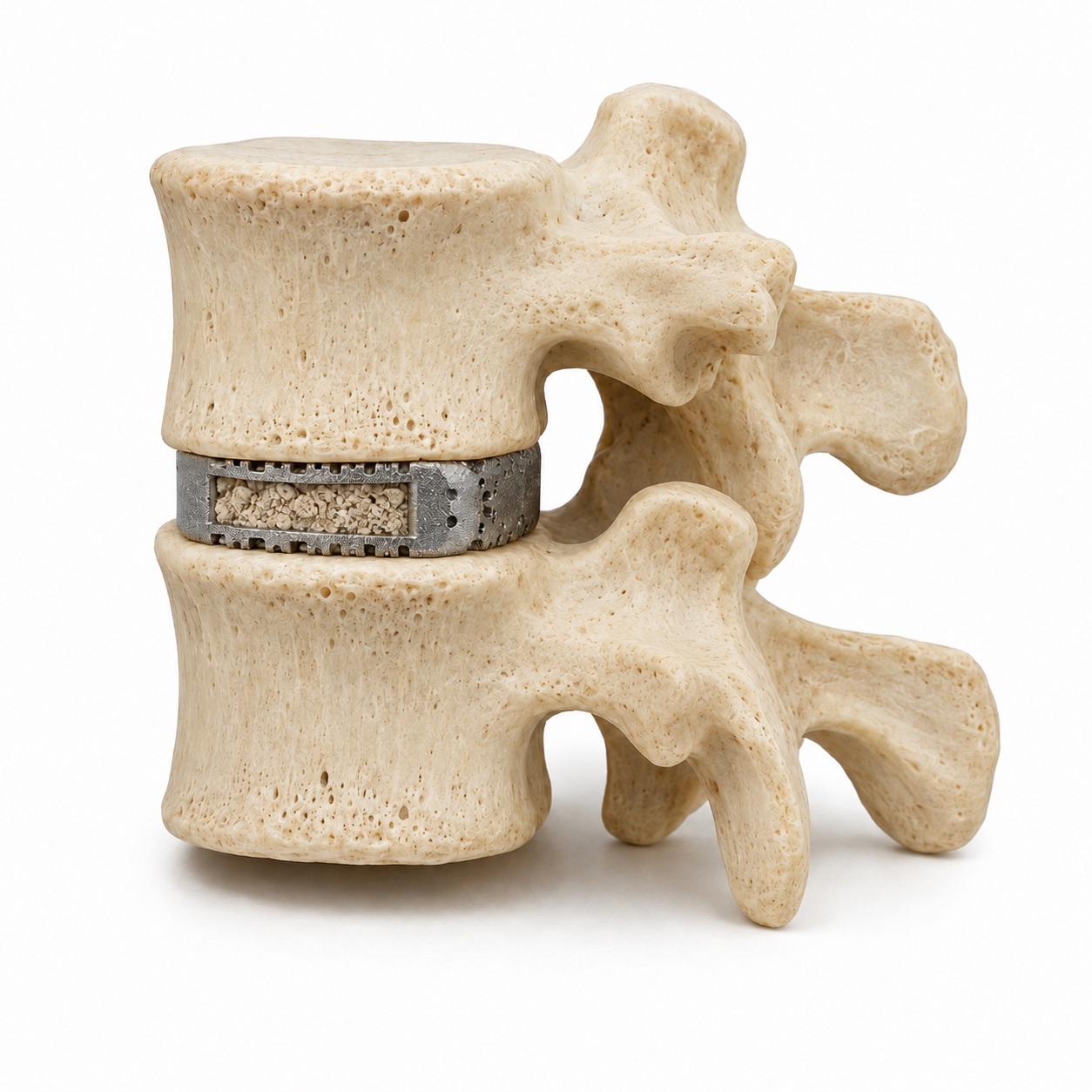
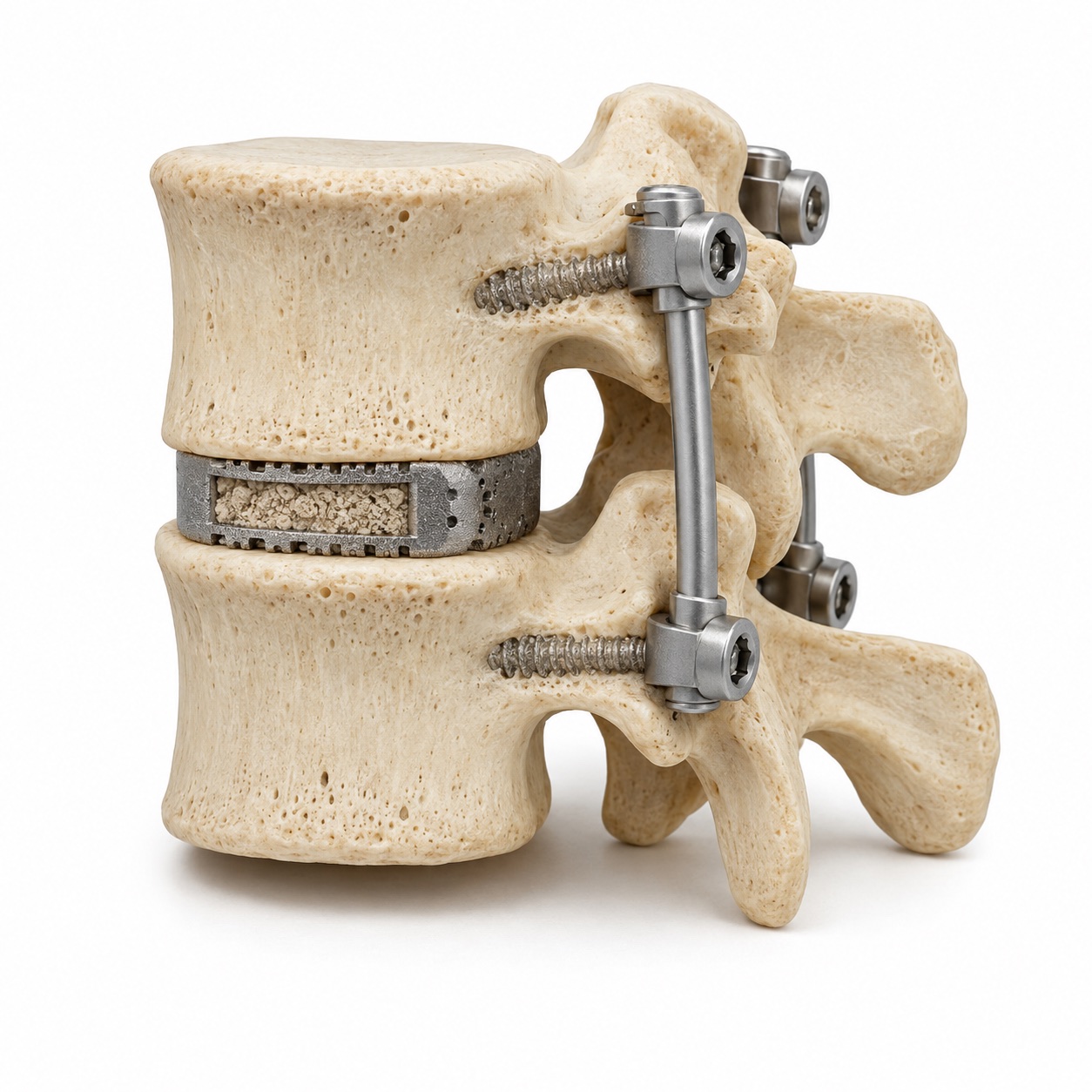
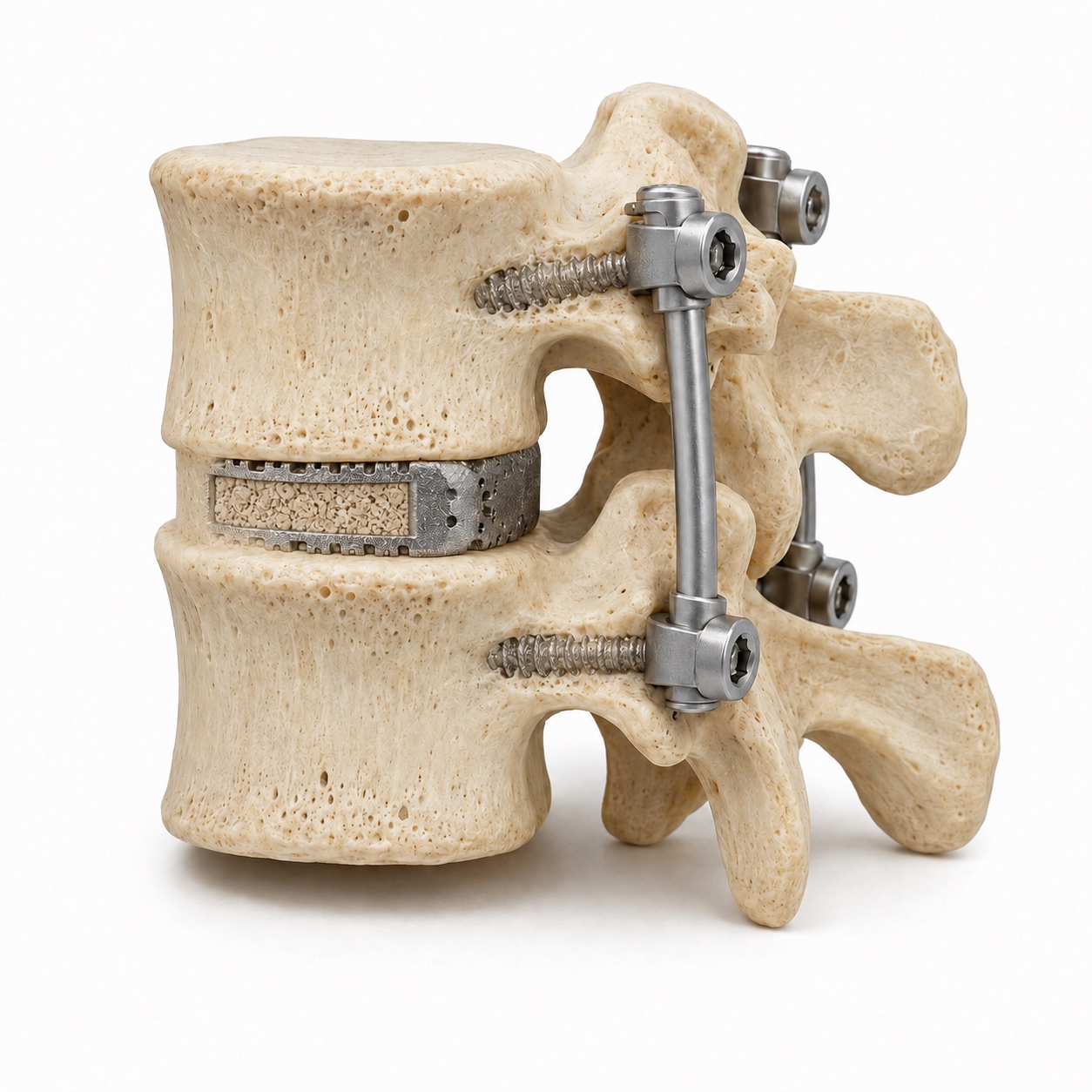
How a Fusion Is Built

Tap each step to watch the construct come together.

front back

Simplified illustration for education — not an exact anatomical depiction.

Interactive — explore the approaches

Different Ways to Reach the Spine

The disc can be reached from the back, front, or side. Dr. Hobbs chooses the approach that fits your level, anatomy, and goals. Tap one to learn more.

Precision Built In

A fusion is only as good as its accuracy and alignment. Dr. Hobbs pairs minimally invasive technique with technology that plans and verifies every step.

Recovery & Healing

The First Weeks

The hardware provides immediate stability, so most patients are up and walking soon after surgery. Light daily activities resume over the first few weeks, with limits on heavy lifting, bending, and twisting while the fusion heals.

3 to 6 Months

This is when the bone actually fuses. Activity is gradually increased and physical therapy helps rebuild strength and flexibility. Dr. Hobbs confirms healing with follow-up imaging.

Back to Life

Once the segment is solidly fused, the painful motion is gone for good. Recovery timelines vary with the number of levels treated and individual healing; Dr. Hobbs tailors a plan to you.

Is fusion your only option?

Not always. For select patients with stenosis and spondylolisthesis, the motion-preserving TOPS System is an FDA-approved alternative to fusion.

Explore TOPS

Why Choose Dr. Hobbs for Spinal Fusion

Minimally Invasive Fusion
Muscle-sparing techniques for less pain and faster recovery
Image-Guided Accuracy
StealthStation navigation and Mazor robotics for precise implant placement
Alignment Expertise
AI-driven planning and patient-specific implants to restore natural alignment
Board-Certified Neurosurgeon
Board-certified by the American Board of Neurological Surgery
Elite Training
University of Kentucky medical degree; neurosurgery residency at the University of Chicago, serving as chief resident
Conservative-First
Nonsurgical options and motion-preserving alternatives are explored before fusion

Frequently Asked Questions About Spinal Fusion

Spinal fusion is a procedure that permanently joins two or more vertebrae so they heal into a single, solid bone. By eliminating motion at a painful or unstable segment, fusion can relieve pain and restore stability. Dr. Hobbs typically uses an interbody spacer packed with bone graft, supported by screws and rods, and performs the procedure with minimally invasive, image-guided techniques whenever possible.
Fusion is used when the spine is unstable or when motion at a segment is the source of pain. Common reasons include spondylolisthesis (a slipped vertebra), instability after decompression, spinal deformity such as scoliosis, fractures, certain tumors, and severe degenerative disc disease that has not responded to nonsurgical care. Dr. Hobbs recommends fusion only when it is the right answer for your specific problem.
Each fused segment no longer moves, but a one- or two-level fusion in the lower back usually causes little noticeable loss of overall flexibility, because the surrounding segments continue to move. When preserving motion is important and a patient qualifies, Dr. Hobbs can discuss motion-preserving alternatives such as the TOPS System.
The hardware provides immediate stability, but the bone itself fuses gradually over about three to six months. Most patients return to light activity within a few weeks and increase activity over time. Dr. Hobbs monitors healing with follow-up imaging and gives each patient an individualized recovery plan.
Yes. Dr. Hobbs frequently performs minimally invasive fusion using small incisions, tubular retractors, and image-guided StealthStation navigation to place implants precisely. Minimally invasive fusion can mean less muscle damage, less blood loss, and a faster recovery than traditional open fusion.
Yes. Nonsurgical care is always explored first, and when surgery is needed, fusion is not always the only option. For appropriate patients with spinal stenosis and spondylolisthesis, Dr. Hobbs offers the motion-preserving TOPS System. He helps each patient choose between fusion and motion-preserving options based on their anatomy and goals.

Talk Through Your Options

If you have been told you may need a fusion — or want a second opinion — Dr. Hobbs will review your imaging and explain whether fusion, a motion-preserving option, or nonsurgical care is right for you. Call today to schedule a consultation.

(219) 250-5010

Monday – Friday · 8:00 AM – 5:00 PM

Crown Point Office

500 E. 109th Avenue
Crown Point, IN 46307

Chesterton Office

601 Gateway Boulevard
Chesterton, IN 46304