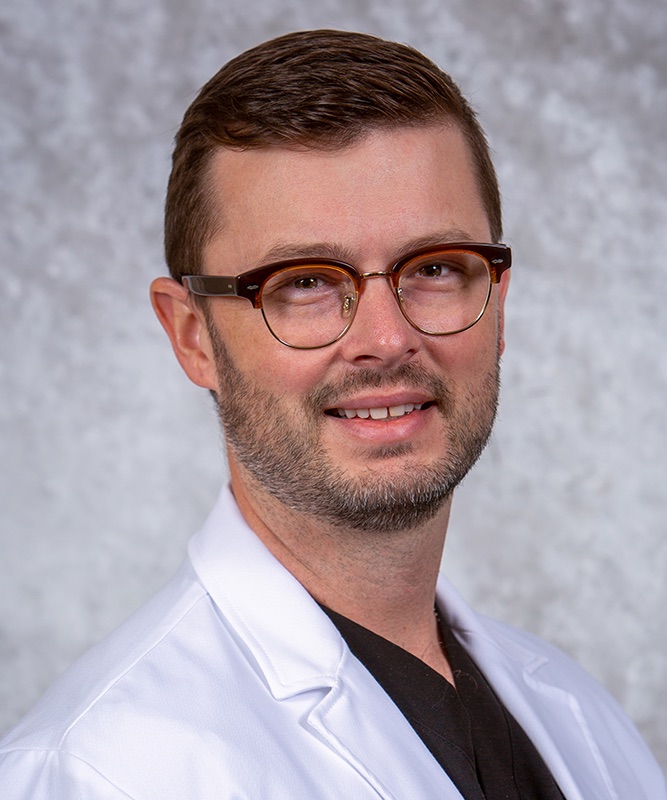
Dr. Hobbs is a specialty-trained neurosurgeon offering minimally invasive spine surgery. Smaller incisions, less pain, and faster recovery — many patients go home the same day.
Call (219) 250-5010Minimally invasive spine surgery (MISS) is an advanced surgical approach that treats spinal conditions through small incisions — often less than one inch — rather than the long incisions required by traditional open surgery. Using specialized instruments, tubular retractors, and advanced minimally invasive techniques, Dr. Hobbs can access the spine with significantly less disruption to the surrounding muscles, ligaments, and soft tissues.
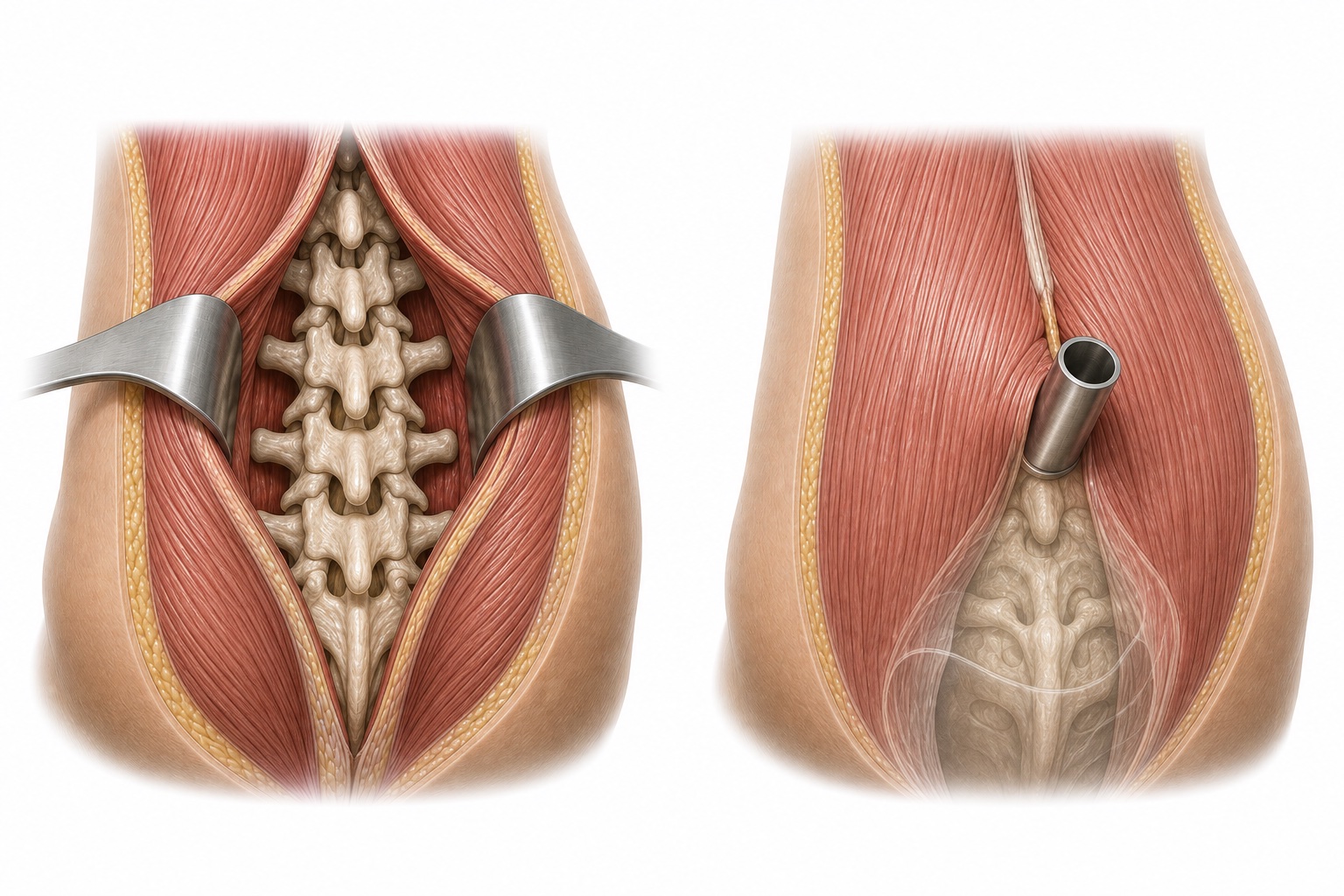
In traditional open spine surgery, the surgeon must cut through and retract large portions of muscle to reach the spine, which causes considerable tissue damage and postoperative pain. With minimally invasive techniques, Dr. Hobbs gently dilates the muscles rather than cutting them, using a series of progressively larger tubes to create a narrow working channel to the spine. The surgery is then performed through this channel with the aid of a microscope or endoscope and real-time advanced minimally invasive techniques.
This approach represents a fundamental shift in spine surgery. By preserving the natural anatomy of the muscles and tissues surrounding the spine, patients experience less postoperative pain, require less medication, recover faster, and return to their normal lives sooner than with traditional open procedures.
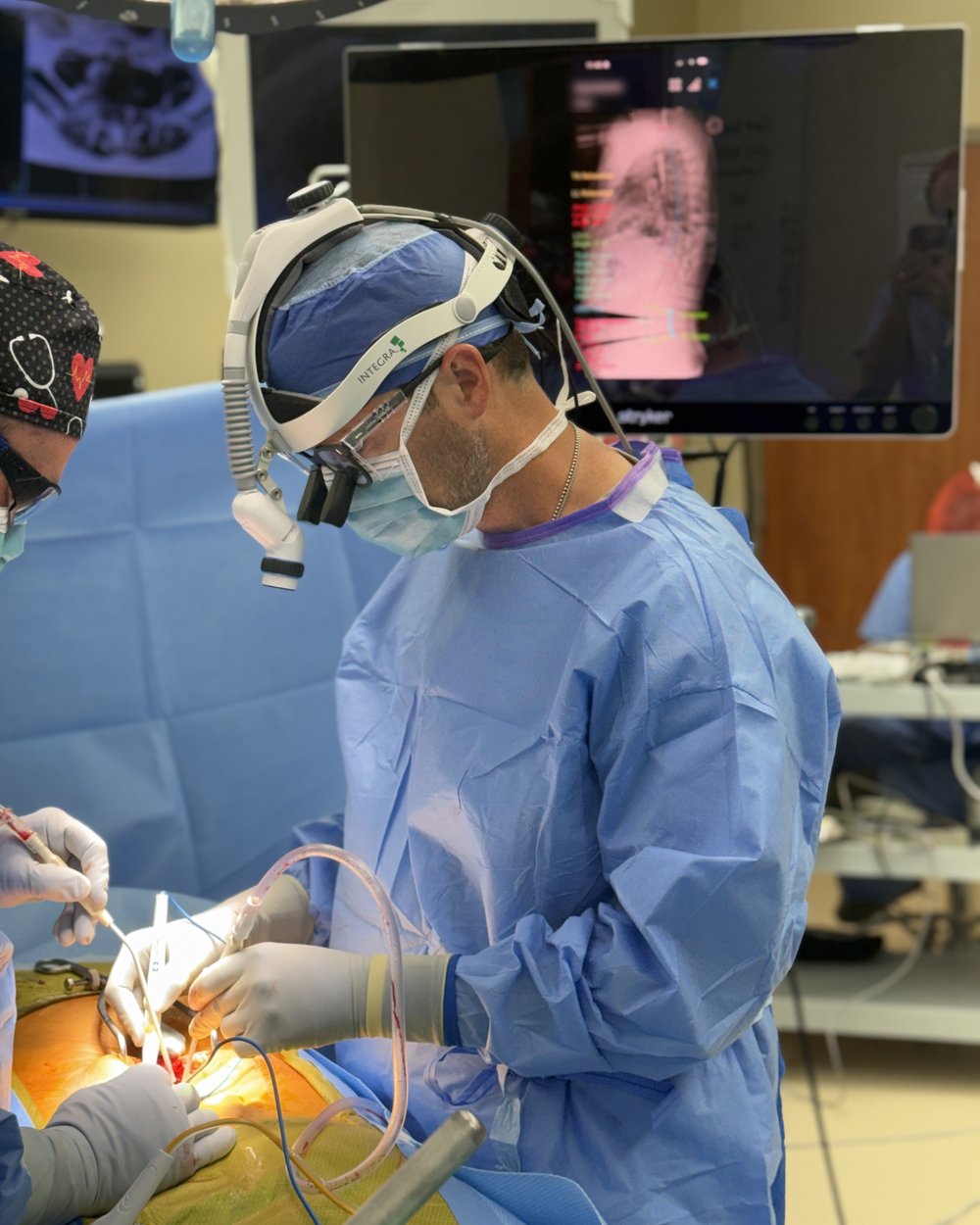
Minimally invasive techniques offer significant advantages over traditional open spine surgery across nearly every measure that matters to patients.
Dr. Hobbs uses minimally invasive techniques to treat a wide range of spinal conditions. Conservative treatment options are always explored first, and surgery is recommended only when nonsurgical approaches have not provided adequate relief or when neurological symptoms are progressing.
Dr. Hobbs performs a comprehensive range of minimally invasive spine procedures, each tailored to the patient's specific condition and anatomy.
Removal of the herniated portion of a disc that is compressing a spinal nerve. Performed through an incision often less than one inch, this is one of the most common minimally invasive spine procedures. Most patients experience immediate leg pain relief and go home the same day.
Learn more →Removal of a small portion of the lamina (the bony roof of the spinal canal) to relieve pressure on the spinal cord or nerves. Dr. Hobbs's minimally invasive approach preserves more of the natural spinal structure than traditional open laminectomy.
Learn more →Enlargement of the foramen — the bony opening where nerve roots exit the spinal canal — to relieve nerve compression caused by bone spurs, disc material, or thickened ligaments. Effective for treating radiculopathy and foraminal stenosis.
For patients with continued pain after a prior spine fusion, Dr. Hobbs performs revision surgery, using image-guided navigation and AI-assisted planning to correct failed, painful, or incomplete fusions.
Learn more →Joining two or more vertebrae together to eliminate painful motion and provide stability. Dr. Hobbs uses minimally invasive techniques with advanced minimally invasive techniques to place screws and implants with exceptional precision through small incisions, resulting in less pain and faster recovery than traditional open fusion.
An ultra-minimally invasive technique using a small endoscope inserted through an incision smaller than a centimeter. The endoscope provides a magnified, high-definition view of the surgical area, allowing Dr. Hobbs to remove disc herniations and bone spurs with minimal tissue disruption.
Dr. Hobbs is extensively trained in Medtronic StealthStation image-guided navigation and uses it routinely. This real-time, 3D guidance — like a GPS for the spine — lets him place implants and instruments with an exceptional degree of accuracy through small, tissue-sparing approaches.
In minimally invasive spine surgery, the spine is accessed through small incisions using specialized instruments, tubular retractors, a surgical microscope, and Medtronic StealthStation image-guided navigation. Rather than cutting through the muscles that support the spine, these techniques work between and around them — preserving the surrounding tissue.
This tissue-sparing approach offers several important advantages over traditional open surgery: smaller incisions and scars, less blood loss, a lower risk of infection, less postoperative pain, and a quicker return to daily life. Many procedures can be performed on an outpatient basis.
Because the muscles and soft tissues are preserved rather than divided, most patients experience a smoother, faster recovery and are able to return to their normal activities sooner than they would after traditional open surgery.
One of the greatest advantages of minimally invasive spine surgery is the significantly shorter recovery period compared to traditional open surgery. Because the muscles and tissues surrounding the spine are preserved rather than cut, the body heals much faster.
Most minimally invasive spine procedures are performed on an outpatient basis. Patients arrive in the morning and go home later the same day once they are comfortable, able to walk, and have met discharge criteria. A responsible adult must be available to drive you home.
Patients are encouraged to walk regularly beginning on the day of surgery. Light daily activities such as walking, bathing, and light household tasks can typically be resumed within the first week or two. Driving is usually permitted once you are off narcotic pain medications.
Most patients can return to desk work and normal daily activities within 4-6 weeks. Physical therapy may begin during this period to rebuild strength, flexibility, and core stability. Dr. Hobbs monitors your progress at follow-up appointments.
Full recovery, including return to strenuous physical activity, sports, and heavy labor, typically occurs within 8-12 weeks. Recovery timelines vary depending on the specific procedure, the patient's overall health, and individual healing factors.
Find out if minimally invasive spine surgery is right for you. Dr. Hobbs offers the most advanced surgical techniques available, with a track record of proven results and faster recovery. Call today to schedule your consultation.
(219) 250-5010Monday – Friday · 8:00 AM – 5:00 PM
500 E. 109th Avenue
Crown Point, IN 46307
601 Gateway Boulevard
Chesterton, IN 46304