Home /Conditions /Sciatica
Spine Condition

Sciatica Treatment

Relief for radiating leg pain caused by sciatic nerve compression. Dr. Hobbs provides expert diagnosis and a full range of treatments — from conservative care to minimally invasive surgery — to eliminate your sciatica and restore your quality of life.

Call (219) 250-5010
Medically reviewed by Jonathan G. Hobbs, M.D. · Updated June 2026

What Is Sciatica?

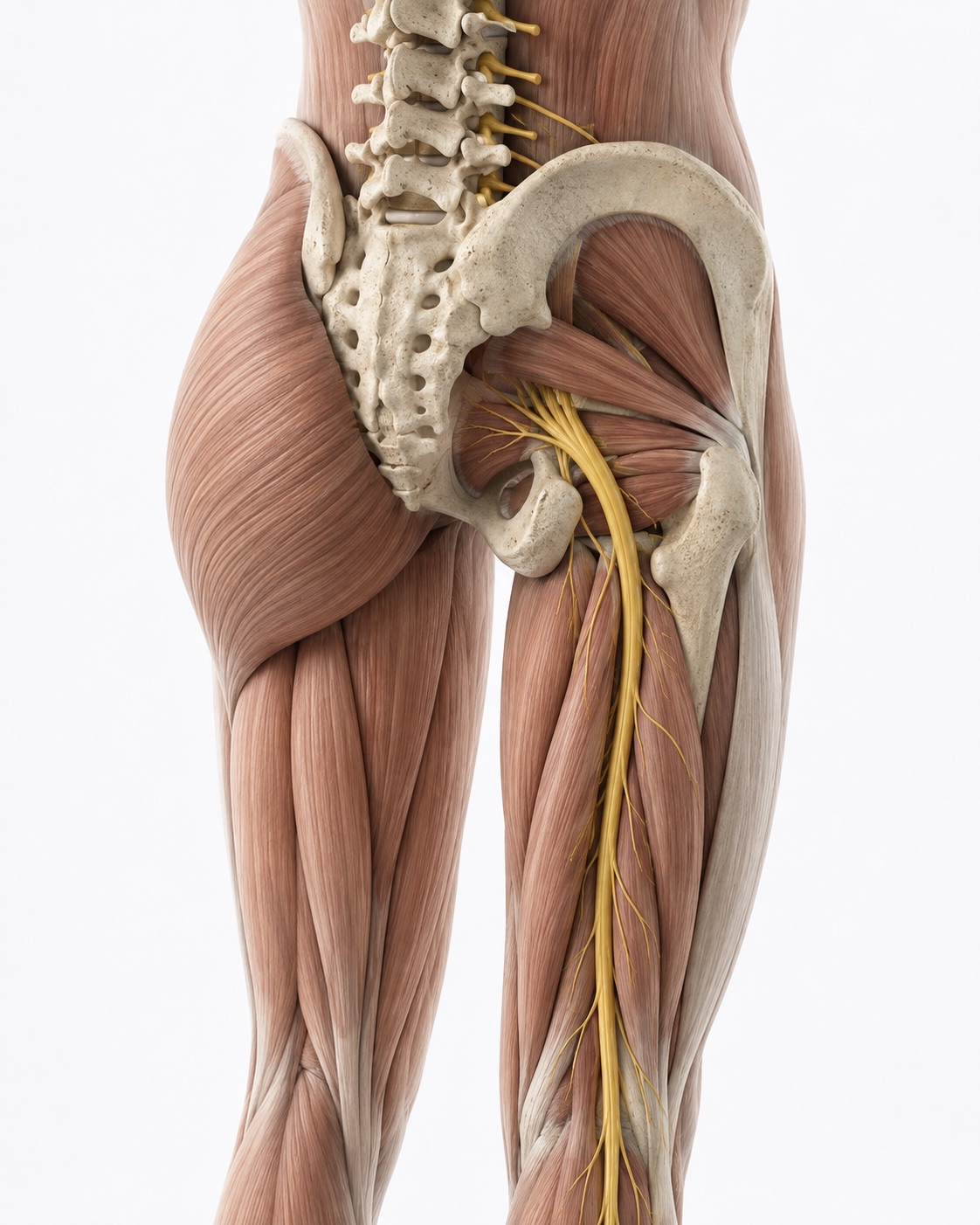
Sciatica refers to pain that radiates along the path of the sciatic nerve — the longest and largest nerve in the body. The sciatic nerve runs from the lower back through the buttocks and down the back of each leg. When this nerve is compressed or irritated at its root in the lumbar spine, it causes pain that can radiate from the lower back through the buttock and down the leg, sometimes reaching the foot.

Sciatica is not a diagnosis in itself but rather a symptom of an underlying condition that is compressing or irritating a nerve root in the lumbar spine. The most common cause is a herniated disc, but spinal stenosis, spondylolisthesis, and degenerative disc disease can also cause sciatica.

Sciatica typically affects only one side of the body. The pain can range from a mild ache to a sharp, burning sensation or excruciating discomfort. Some people also experience numbness, tingling, or muscle weakness in the affected leg or foot.

Symptoms of Sciatica

  • Pain radiating from the lower back or buttock down the back of the thigh and leg
  • Sharp, burning, or shooting pain that may worsen with sitting, coughing, or sneezing
  • Numbness or tingling in the leg, calf, or foot
  • Weakness in the affected leg or foot (e.g., difficulty lifting the foot — foot drop)
  • Pain that is typically worse on one side of the body
  • Difficulty standing up or walking due to pain

Emergency Warning Signs

Seek immediate medical attention if you experience sudden loss of bladder or bowel control, numbness in the groin or inner thighs, or rapid progressive weakness in both legs. These may indicate cauda equina syndrome, a rare but serious condition requiring emergency surgery.

Common Causes of Sciatica

Herniated disc — The most common cause. Disc material presses directly on the sciatic nerve root.
Spinal stenosis — Narrowing of the spinal canal compresses the nerve roots that form the sciatic nerve.
Spondylolisthesis — A vertebra slips forward over the one below, narrowing the nerve opening.
Degenerative disc disease — Age-related disc breakdown can cause bone spurs or disc bulging that compresses nerves.
Piriformis syndrome — The piriformis muscle in the buttock spasms and irritates the sciatic nerve.
Bone spurs — Overgrowths of bone on the vertebrae can narrow nerve pathways.

Treatment Options for Sciatica

Dr. Hobbs strongly believes that nonsurgical solutions should be explored first. The majority of sciatica cases improve with conservative treatment within 4-6 weeks.

Conservative Treatment

  • Physical therapy — Stretching and strengthening exercises to reduce nerve pressure and prevent recurrence
  • Anti-inflammatory medications — NSAIDs and oral steroids to reduce inflammation around the compressed nerve
  • Epidural steroid injections — Targeted injections to deliver anti-inflammatory medication directly to the compressed nerve
  • Activity modification — Avoiding aggravating positions while staying as active as possible

Surgical Treatment

When conservative care fails after 6-12 weeks, or when neurological symptoms worsen, Dr. Hobbs offers minimally invasive surgical options:

  • Minimally invasive microdiscectomy — Removes the herniated disc fragment pressing on the sciatic nerve through a small incision. Most patients go home the same day with immediate relief.
  • Endoscopic decompression — Ultra-minimally invasive approach using a tiny camera through an incision smaller than a centimeter.
  • Laminectomy or foraminotomy — Creates more space for the nerve when sciatica is caused by stenosis or bone spurs.

Why Choose Dr. Hobbs for Sciatica Treatment

Specialty-Trained Neurosurgeon
Board-certified neurosurgeon specializing in sciatica and nerve compression
Elite Training
University of Kentucky medical degree; University of Chicago neurosurgery residency
Minimally Invasive Spine Surgery
Specialty-Trained to use advanced minimally invasive techniques for outpatient MISS
Conservative-First
Nonsurgical solutions are always explored before recommending surgery

Frequently Asked Questions About Sciatica

Sciatica is most commonly caused by a herniated disc in the lumbar spine pressing on the sciatic nerve root. Other causes include spinal stenosis, spondylolisthesis, degenerative disc disease, and piriformis syndrome. Dr. Hobbs performs a thorough evaluation including physical examination and MRI to identify the exact cause of your sciatica and develop the most effective treatment plan.
Most cases of acute sciatica improve within 4-6 weeks with conservative treatment. However, some patients experience chronic sciatica lasting longer than 3 months, especially when caused by structural problems like a large herniated disc or significant stenosis. If your sciatica hasn't improved after 6-12 weeks of conservative care, or if you have progressive weakness, Dr. Hobbs may recommend minimally invasive surgical intervention.
Yes. The majority of sciatica cases resolve with conservative treatment. Dr. Hobbs always explores nonsurgical options first, including physical therapy, anti-inflammatory medications, epidural steroid injections, and activity modification. Surgery is only recommended when conservative treatment fails after a reasonable period or when there are concerning neurological symptoms like progressive weakness or loss of function.
The most common surgical treatment for sciatica is a minimally invasive microdiscectomy. Dr. Hobbs removes the portion of the herniated disc pressing on the sciatic nerve through a small incision, typically less than one inch. The procedure usually takes under an hour, and most patients go home the same day with immediate pain relief. Recovery is significantly faster than traditional open surgery, with most patients returning to normal activities within 4-6 weeks.
Seek immediate emergency medical attention if you experience sudden loss of bladder or bowel control, numbness in the groin or inner thighs (saddle anesthesia), or rapidly progressive weakness in both legs. These symptoms may indicate cauda equina syndrome, a rare but serious condition requiring urgent surgery to prevent permanent nerve damage. This is a medical emergency — do not wait.

Get Relief from Sciatica

Don't let sciatic nerve pain control your life. Dr. Hobbs can help you find the right treatment to get back to doing what you love.

(219) 250-5010

Monday – Friday · 8:00 AM – 5:00 PM

Crown Point Office

500 E. 109th Avenue
Crown Point, IN 46307

Chesterton Office

601 Gateway Boulevard
Chesterton, IN 46304