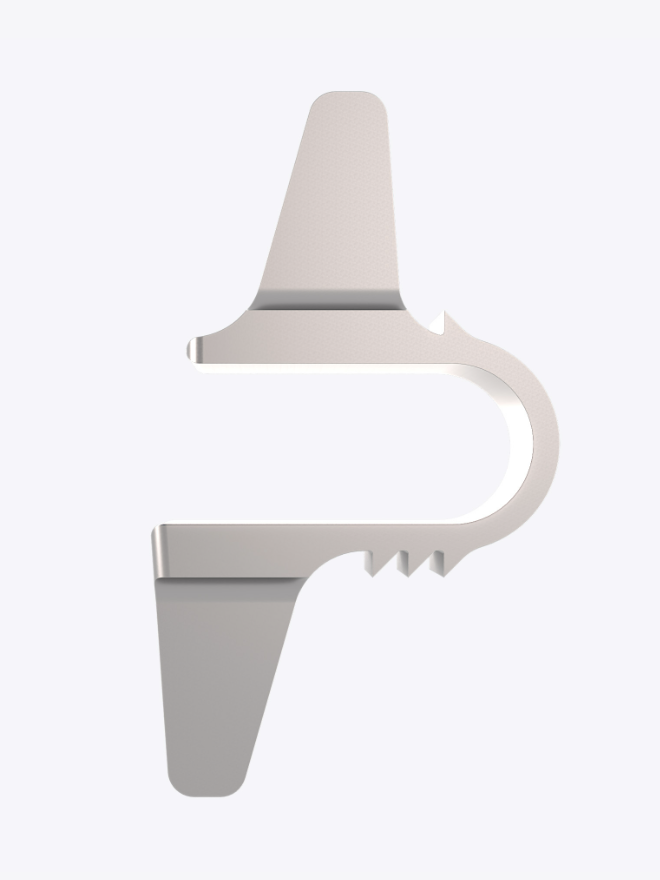
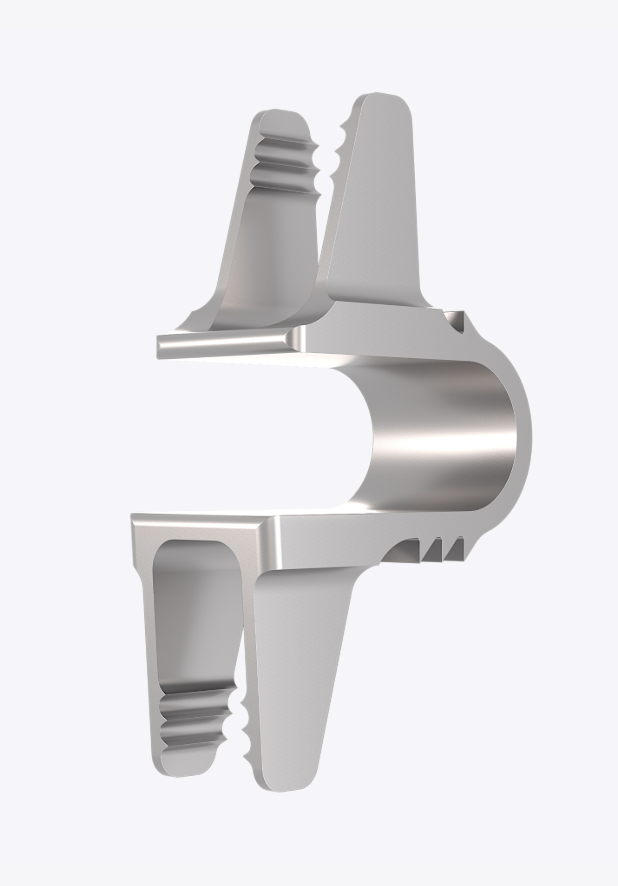
A small titanium device that stabilizes the spine after a decompression for lumbar spinal stenosis — relieving leg and back symptoms while preserving natural motion, without the fusion of the bones.
Call (219) 250-5010


The coflex implant — a small, U-shaped titanium device placed between the bones of the spine.
Coflex is a small, U-shaped titanium implant used for interlaminar stabilization. When the spinal canal narrows — a condition called lumbar spinal stenosis — the nerves get squeezed, causing leg, buttock, or groin pain and trouble walking. The first part of surgery is a decompression to relieve that pressure. The question is then how to keep the segment stable.
Traditionally, that has meant a fusion, which permanently locks the bones together. Coflex offers a different path: after the decompression, the device is placed in the midline between the bones of the spine (the lamina), where it supports and stabilizes the segment while preserving its natural motion.
The coflex Interlaminar Technology received FDA Premarket Approval (PMA) in October 2012. The implant is made from a wrought titanium 6-aluminum 4-vanadium alloy and comes in a range of sizes to fit each patient.
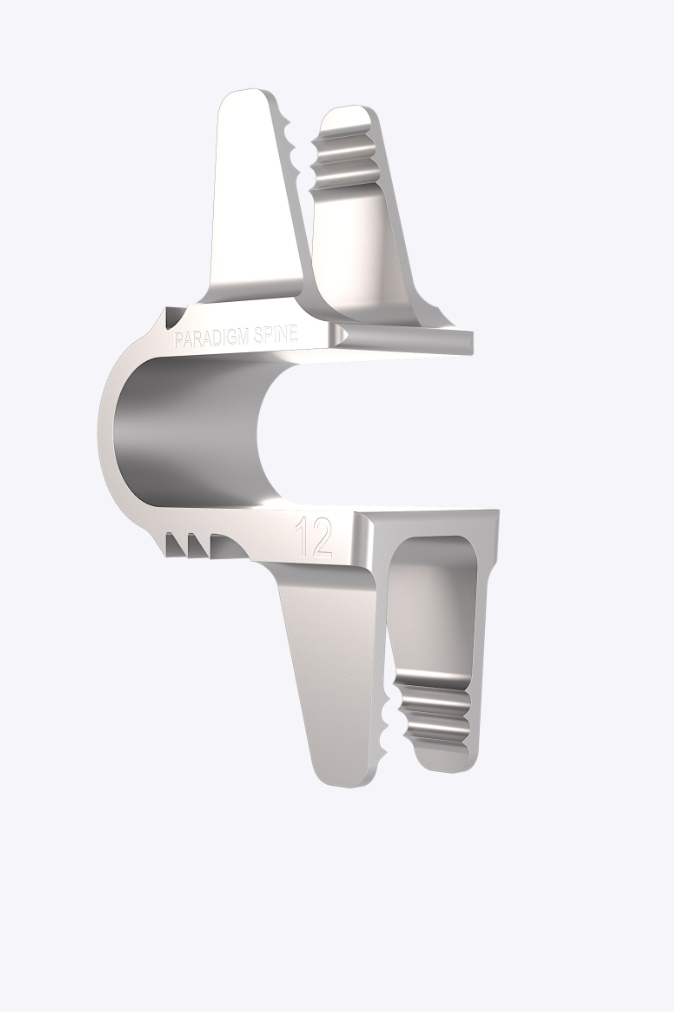
This short animation shows how the coflex device stabilizes the spine after decompression while preserving motion.
Dr. Hobbs first relieves the narrowing in the spinal canal, removing the bone and thickened ligament that are pressing on the nerves. This is what addresses the leg, buttock, and groin symptoms of stenosis.
The coflex device is placed in the midline between the lamina of the treated level. Its wings gently grip the bone above and below, providing support and stability without screws into the vertebral bodies and without fusing the segment.
Because the bones are stabilized rather than fused, the treated segment keeps moving in a controlled way. This is intended to protect the levels above and below from the added stress that often follows a fusion.
For patients with lumbar spinal stenosis who need more than a decompression alone, the two main surgical options are decompression plus fusion and decompression plus coflex. Fusion is effective, but permanently locking a segment can place extra stress on the neighboring levels over time.
Coflex was studied head-to-head against fusion in a rigorous FDA clinical trial that compared decompression plus coflex with decompression plus pedicle-screw fusion. Coflex demonstrated outcomes that were better than or equivalent to fusion across the major endpoints — while preserving motion at the treated level.
Not every patient is a candidate for coflex, and fusion remains the better option in some situations. Dr. Hobbs will help you choose the approach that fits your anatomy and goals.
Coflex is approved for a specific group of patients. You may be a candidate if you:
Candidacy is determined individually. Dr. Hobbs reviews your symptoms, examination, and imaging to confirm whether coflex is appropriate for you. The criteria above are a plain-language summary of the FDA-approved indication.
If you have lumbar spinal stenosis and want to understand your options beyond fusion, schedule a consultation with Dr. Hobbs. He will review your imaging and help you decide whether coflex, another motion-preserving option, or fusion is the best fit.
(219) 250-5010Monday – Friday · 8:00 AM – 5:00 PM
500 E. 109th Avenue
Crown Point, IN 46307
601 Gateway Boulevard
Chesterton, IN 46304