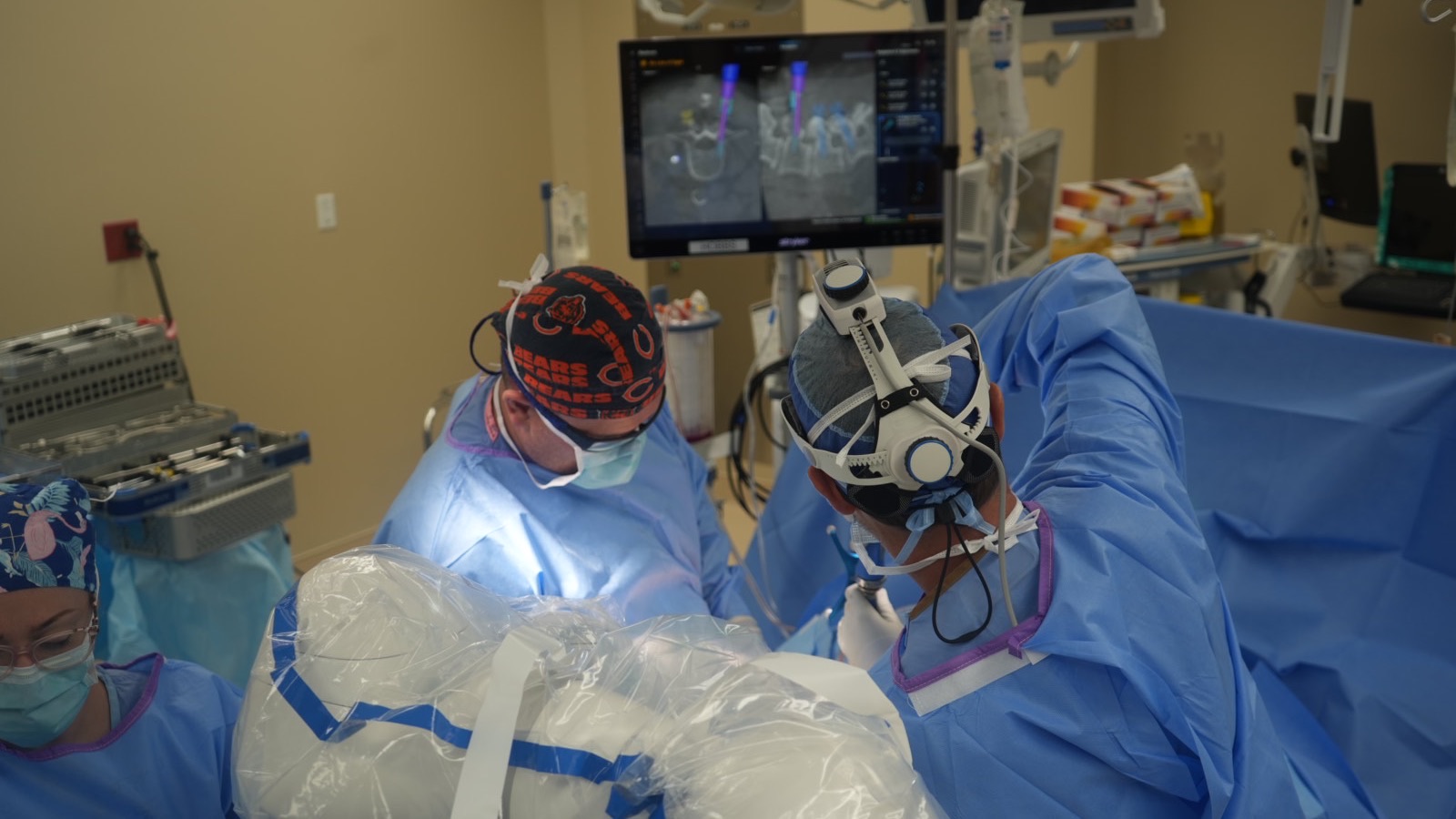
When low back, buttock, or groin pain is coming from the sacroiliac (SI) joint and months of conservative care have not helped, fusing the joint stops the motion that is causing the pain. Dr. Hobbs uses the Medtronic Rialto™ SI Fusion System through a small incision in the back, with O-arm™ 3D imaging and StealthStation™ navigation confirming every implant before he closes.
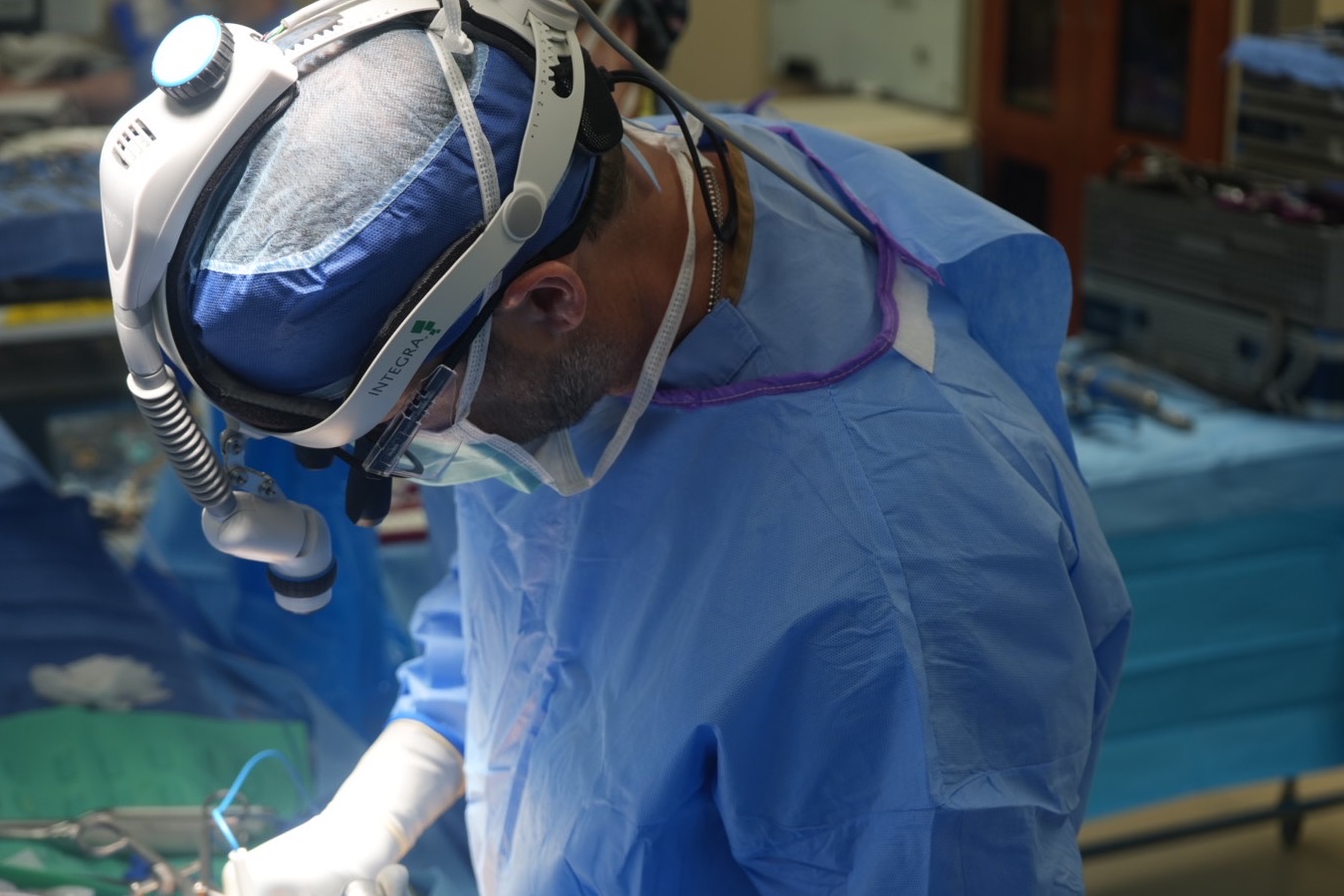
SI joint fusion is an operation that joins the sacrum and the ilium — the two bones that meet at the sacroiliac joint — into one solid structure, so the motion that is causing pain stops. Small threaded implants are placed across the joint and packed with bone graft, and bone grows through them over the months that follow.
The SI joint sits in the bony pelvis where the sacrum meets the ilium on each side. Strong ligaments and muscles hold it together, and it works as a shock absorber, transmitting load from the upper body down into the legs. It normally moves very little.
When that joint becomes painful, the pain is felt in the low back, buttock, groin, and leg, and it can make walking, sitting, sleeping, and getting in and out of a car difficult. Because those symptoms overlap so closely with lumbar problems, SI joint pain is often mistaken for a disc problem, sciatica, or a hip problem.
The SI joint at a glance
Several things can leave the joint painful or moving abnormally:
The operation is done under general anesthesia through a small incision in the back. Tap each step to see what happens.
General anesthesia is used. The procedure is minimally invasive with minimal tissue disruption, and it is typically outpatient with same-day discharge.
The Rialto™ SI Fusion System, made by Medtronic, uses cylindrical threaded titanium-style implants offered in several lengths. One, two, or three are placed across the sacroiliac joint at the surgeon’s discretion; two is typical.
Each implant is packed with bone graft — your own bone, donor bone, or both — to promote fusion. Over time, bone grows through the implants and joins the sacrum and the ilium into one solid structure, so the painful motion at the joint stops.
What sets this system apart is the route. With Rialto™, the surgeon works from the back: a small incision above the buttock, just below the waist and slightly to the left or right of the spine. Most other SI fusion devices are placed from the side, through the buttock. Both routes are minimally invasive; the posterior approach is the one Dr. Hobbs uses, and it keeps tissue disruption low.
Fusion is considered only once the SI joint has been confirmed as the source of the pain and non-surgical treatment has been given a fair trial. Dr. Hobbs looks for all of the following:
Inflammation and wear of the joint, or abnormal motion at it — identified through examination, imaging, and injection rather than assumed from symptoms alone.
The threshold is at least six months of conservative care. Surgery is not the first step for SI joint pain.
Meaningful, temporary relief after an image-guided injection of numbing medicine into the joint supports the SI joint as the pain source and is part of the candidate criteria.
Low back, buttock, groin, and leg pain that makes walking, sitting, sleeping, and getting in and out of a car painful.
SI joint pain cannot be identified from symptoms alone, because it overlaps so closely with lumbar disc and hip problems. The workup has three parts:
Conservative care comes first for everyone. These are the options that follow when it has not held.
| Continued conservative care and injections | Radiofrequency ablation | SI joint fusion | |
|---|---|---|---|
| What it does | Reduces pain and improves how the joint is loaded and supported | Interrupts the nerves that carry pain signals from around the joint | Joins the sacrum and ilium into one structure so the painful motion stops |
| What it involves | Physical therapy, activity modification, anti-inflammatory medication, chiropractic care, an SI belt, therapeutic injections | A needle-based pain-management procedure performed around the joint | Surgery under general anesthesia; threaded implants packed with bone graft placed across the joint |
| How long it lasts | Varies; for some people it is enough on its own | Temporary — relief is measured in months, and the procedure can be repeated | Intended to be permanent once the bones have fused |
| Where it fits | First, and for at least six months before fusion is considered | A pain-management option when conservative care is not holding | When the joint is confirmed as the source and the first two have not given lasting relief |
| Trade-offs | Does not change the joint itself | Does not change the joint itself; the relief wears off | It is surgery, with the risks of surgery, and the fusion takes months to form |
Dr. Hobbs will explain which of these fits your examination, imaging, injection response, and what you have already tried.
The SI joint is an underrecognized source of low back pain, and the case for treating it starts with making the diagnosis correctly rather than with an outcome statistic.
An estimate from a comprehensive review of SI joint anatomy, diagnosis, and treatment — which is why the joint is worth ruling in or out when low back pain has not responded to treatment aimed at the discs.
Cohen SP, Anesth Analg, 2005Because SI joint pain overlaps with lumbar disc and hip problems, the workup combines history and examination with provocative tests, imaging to rule out other causes, and an image-guided diagnostic injection into the joint. A meaningful, temporary response to that injection is part of the candidate criteria for fusion.
Cohen SP, Anesth Analg, 2005Physical therapy, activity modification, anti-inflammatory medication, chiropractic care, an SI belt, and therapeutic injections come before fusion is considered. That threshold, the candidate and non-candidate criteria, and the implant description on this page come from the manufacturer’s patient information for the system Dr. Hobbs uses.
Medtronic, Rialto™ SI Fusion System patient informationThe implants hold the joint from the moment they are placed. The fusion itself — bone growing through them — takes months, which is why the office gives you an individual timeline rather than a fixed number of weeks.
General anesthesia, a minimally invasive posterior approach, and typically same-day discharge. You are monitored afterward and given medication for pain and nausea, and incision care is taught before you go home.
You follow a gradual activity program, possibly with a back brace. Repetitive bending, lifting, twisting, and athletics are avoided while healing, as is vibration such as long car rides for a period. Follow-up visits track your progress.
Physical therapy focuses on core strength and safe body mechanics while bone grows through the implants and the joint fuses. Activity is increased step by step on a schedule the office sets for you.
Call (219) 250-5010. For an emergency, call 911.
Dr. Hobbs reviews these with you individually, against your own health and imaging, before you decide.
SI joint fusion with the Rialto™ system sits alongside the other navigated, tissue-sparing, outpatient-first tools Dr. Hobbs uses — the smallest operation that solves the problem.

ABNS
Residency
M.D.Certified by the American Board of Neurological Surgery, with training in surgery of the spine and the nerves that run through it.
He plans the implant trajectory on your imaging and uses O-arm™ 3D imaging with StealthStation™ navigation to follow it and verify it before closing.
Small incisions and minimal tissue disruption, with most procedures done on an outpatient basis.
A free MRI review is available before you commit to a visit.
Fusion is considered only after the joint is confirmed as the pain source and non-surgical care has been given a real trial.
Consultations at Lakeshore Bone & Joint Institute. See office locations.
If low back, buttock, or groin pain has not responded to treatment aimed at your discs, the sacroiliac joint is worth ruling in or out. Dr. Hobbs will review your imaging and explain whether continued conservative care, a pain-management option, or fusion is the right next step.
(219) 250-5010Monday – Friday · 8:00 AM – 5:00 PM
500 E. 109th Avenue
Crown Point, IN 46307
601 Gateway Boulevard
Chesterton, IN 46304
Your next step
Jonathan G. Hobbs, M.D. is a board-certified neurosurgeon at Lakeshore Bone & Joint Institute. For questions about sacroiliac joint fusion, call the office to arrange an individual evaluation and discuss which options may be appropriate.
Consultation offices: Crown Point, Chesterton. Your symptoms, examination, imaging, and prior treatment help guide the discussion.
Page updated . About content and medical review dates.