Growth is complete
The patient is skeletally mature.
Lumbar spine · Motion preservation
Support for the disc.
Room for motion.
A flexible implant designed to share the load on a painful lumbar disc while allowing movement at the treated level. Explore how it works and whether it belongs in your treatment discussion.
FDA approved · Specific U.S. indications apply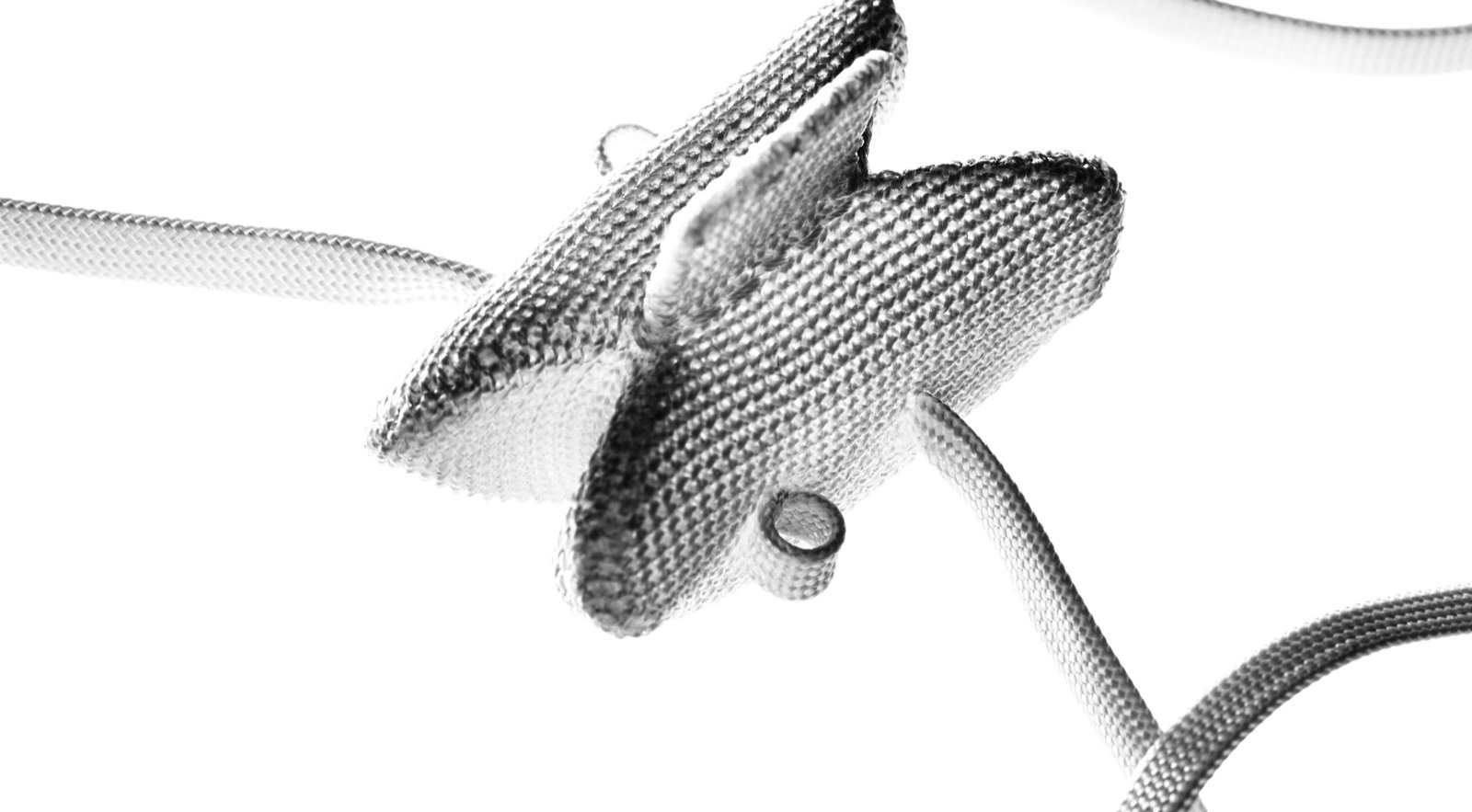
See what changes
DIAM sits between the bony projections at the back of two neighboring vertebrae, called the spinous processes. Its flexible spacer supports the segment from behind.
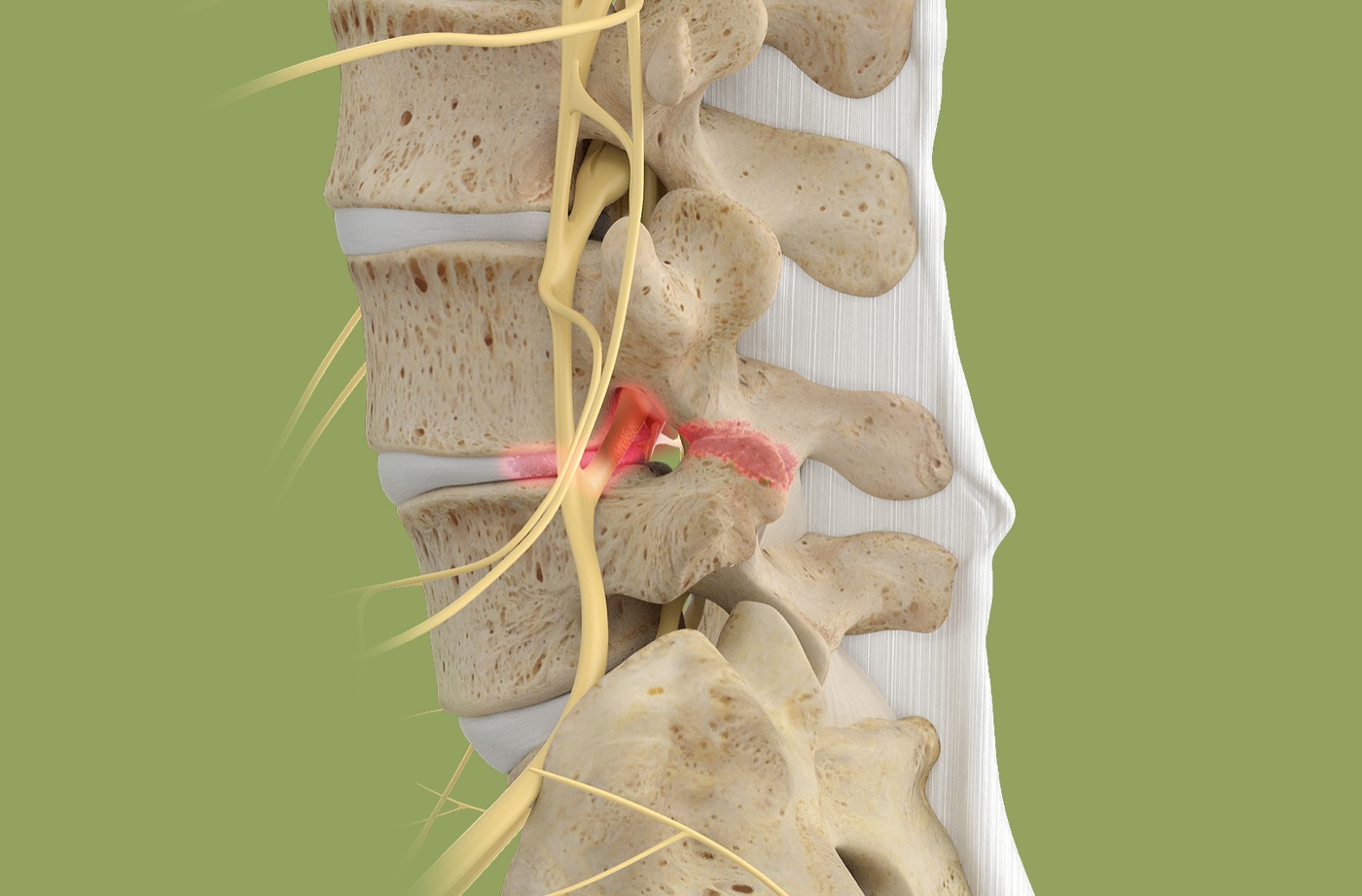
Before stabilization
The illustration highlights the disc and nearby joints at one lumbar segment. Disc wear can change how this area carries load.
An image alone cannot identify the source of back pain. Symptoms, an examination, and imaging must fit together.
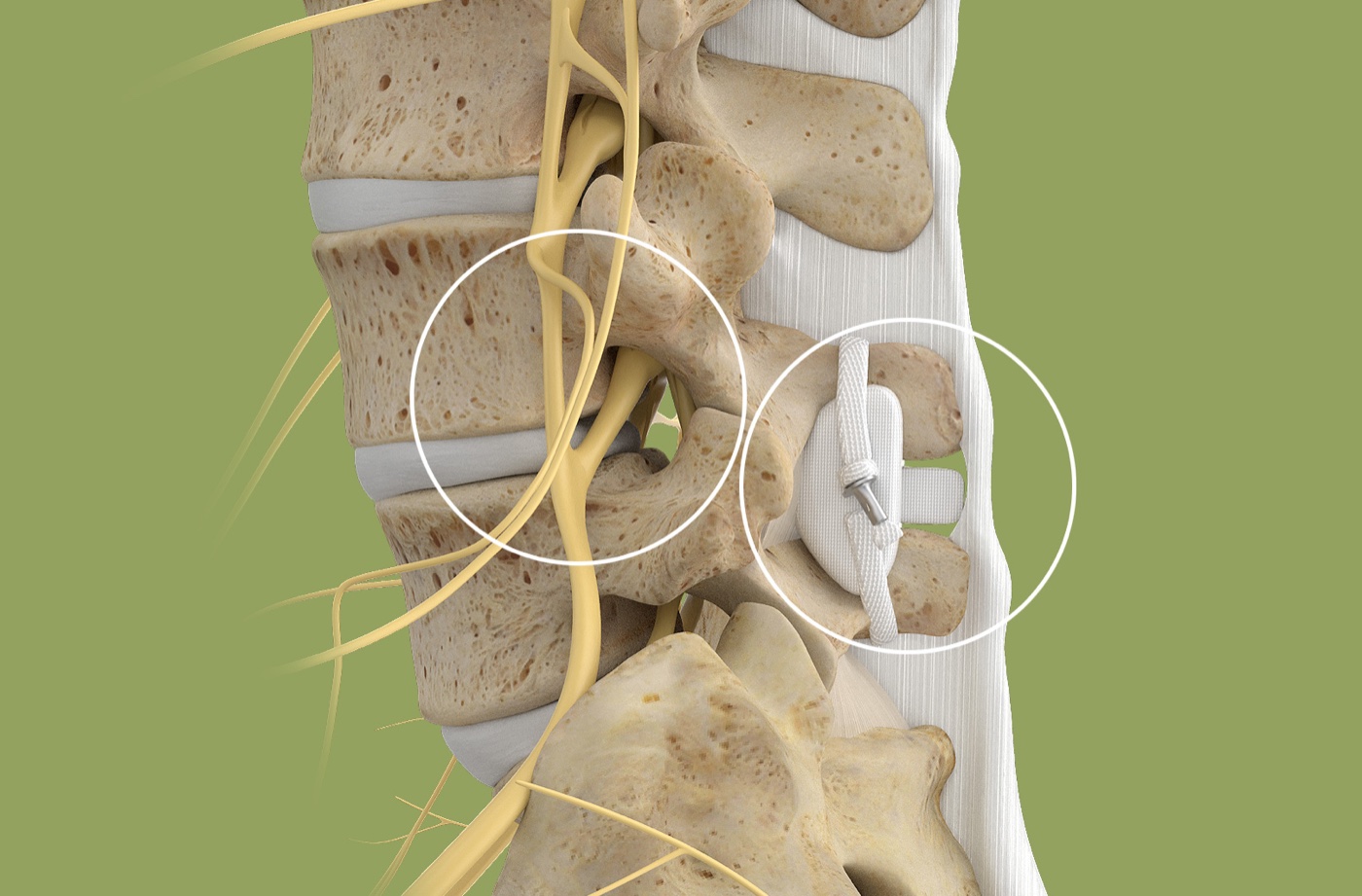
With DIAM in position
The right circle identifies the spacer between the spinous processes. The other circle draws attention to the nearby nerve opening.
These illustrations explain the implant’s position and design. They do not predict an individual result.
A flexible central spacer.
A woven cover and two securing tethers.
Small metal components secure the tethers.
Device design and materials: FDA safety and effectiveness summary (PDF).
Watch it come together
This Companion Spine animation introduces the implant and shows its position in the lumbar spine.
This manufacturer animation predates U.S. approval and includes broader treatment language. Current U.S. eligibility is summarized below; the animation is provided to explain the device’s design.
The large bones are the vertebrae, the pads between them are the discs, and the yellow structures are nerves. DIAM is the white spacer behind the spine. Notice how its central body rests between the spinous processes and its tethers extend around them.
The right problem. The right patient.
DIAM has a specific U.S. indication. The starting point is moderate to severe, disc-related low back pain that is greater than leg pain.
The patient is skeletally mature.
Degenerative disc disease affects one treatment level: L2–L3, L3–L4, or L4–L5.
The current episode has not improved after at least six months of nonsurgical care.
The history, examination, and imaging support the diagnosis and treatment plan.
Current indication: FDA DIAM approval record, P240043.
The procedure
The operation is planned for your anatomy. These are the main steps described in the patient guide.
The surgeon approaches through an incision in the lower back and prepares the space between the spinous processes.
Sizing instruments help select an implant that fits. DIAM is placed between the adjacent bony projections.
The tethers are secured around the adjacent structures, the implant position is checked, and the incision is closed.
Planning beyond surgery
Expect instructions for incision care, walking, lifting, bending, and twisting. A brace or physical therapy may be part of the plan. Follow-up visits help your team assess healing and guide activity.
Driving, work, and exercise depend on your symptoms, job demands, and recovery. Ask for specific milestones before surgery.
Explore the surgical processPossible complications include infection, bleeding, anesthesia problems, nerve injury, spinous process fracture, implant movement or failure, continued pain, and further surgery.
A device that preserves motion still involves an operation. Ask how the expected benefit compares with the risks and other options in your situation.
Read the FDA patient guide (PDF)Understand the options
Similar goals do not make these procedures interchangeable. Start with the diagnosis, then discuss the treatment.
Before your consultation
DIAM is a flexible interspinous spacer with a silicone core, polyester covering and tethers, and titanium securing crimps. It is placed between adjacent spinous processes at the back of the lumbar spine to share load while preserving movement.
No. DIAM is designed to support a segment while allowing movement. Fusion aims to join vertebrae and stop motion at the treated level. The appropriate choice depends on the diagnosis and spinal stability.
Yes. The FDA approved the DIAM Spinal Stabilization System on December 10, 2025, under PMA P240043. Its U.S. indication is limited to selected skeletally mature patients with single-level lumbar degenerative disc disease, back pain greater than leg pain, and at least six months of unsuccessful nonsurgical treatment for the current episode.
No. The U.S. indication covers one level from L2 to L5: L2–L3, L3–L4, or L4–L5. It does not include L5–S1 or treatment of multiple disc levels. Other selection criteria also apply.
DIAM and Coflex are different implants with different U.S. indications. DIAM addresses selected disc-related back pain. Coflex is used after decompression in selected patients with lumbar spinal stenosis. A consultation is needed to decide whether either option fits your problem.
There is no single timeline for everyone. Your surgeon will provide instructions for activity, incision care, follow-up visits, and any brace or therapy. Ask when you can safely drive, return to work, lift, and exercise based on your recovery and daily demands.
Coverage and prior authorization depend on your plan and individual circumstances. Ask the office and your insurer to confirm benefits, authorization requirements, and expected costs before scheduling. FDA approval alone does not establish insurance coverage.
Bring your questions. Bring your imaging.
Discuss your diagnosis, prior treatment, and goals with Dr. Hobbs.
Your next step
Jonathan G. Hobbs, M.D. is a board-certified neurosurgeon at Lakeshore Bone & Joint Institute. For questions about diam ™ spinal stabilization, call the office to arrange an individual evaluation and discuss which options may be appropriate.
Consultation offices: Crown Point, Chesterton. Your symptoms, examination, imaging, and prior treatment help guide the discussion.
Page updated . About content and medical review dates.